![http://UPSC%20coaching%20in%20India%20-%20Best%20UPSC%20coaching%20institute%20-%20UPSC%20Mentor%20coaching%20-%20UPSC%20preparation%20institute%20-%20IAS%20coaching%20center%20-%20UPSC%20online%20coaching%20-%20Best%20IAS%20coaching%20in%20India%20-%20UPSC%20classes%20for%20beginners%20-%20Civil%20services%20preparation%20-%20IAS%20preparation%20institute%20-%20UPSC%20mentorship%20program%20-%20UPSC%20exam%20guidance%20-%20IAS%20study%20material%20-%20UPSC%20Prelims%20coaching%20-%20UPSC%20Mains%20coaching%20-%20UPSC%20interview%20preparation%20-%20Best%20IAS%20online%20classes%20-%20UPSC%20coaching%20with%20personal%20mentorship%20-%20Affordable%20UPSC%20coaching%20-%20UPSC%20test%20series%20-%20UPSC%20coaching%20near%20me%20-%20Best%20IAS%20coaching%20near%20me%20-%20UPSC%20institute%20in%20[your%20city]%20-%20IAS%20coaching%20center%20in%20[your%20city]%20-%20The%20UPSC%20Mentor%20coaching%20-%20The%20UPSC%20Mentor%20IAS%20classes%20-%20The%20UPSC%20Mentor%20UPSC%20course%20-%20UPSC%20Mentor%20online%20program.](https://theupscmentor.in/wp-content/uploads/2024/11/THE-UPSC-2-e1762319162137.png)
 admin
admin 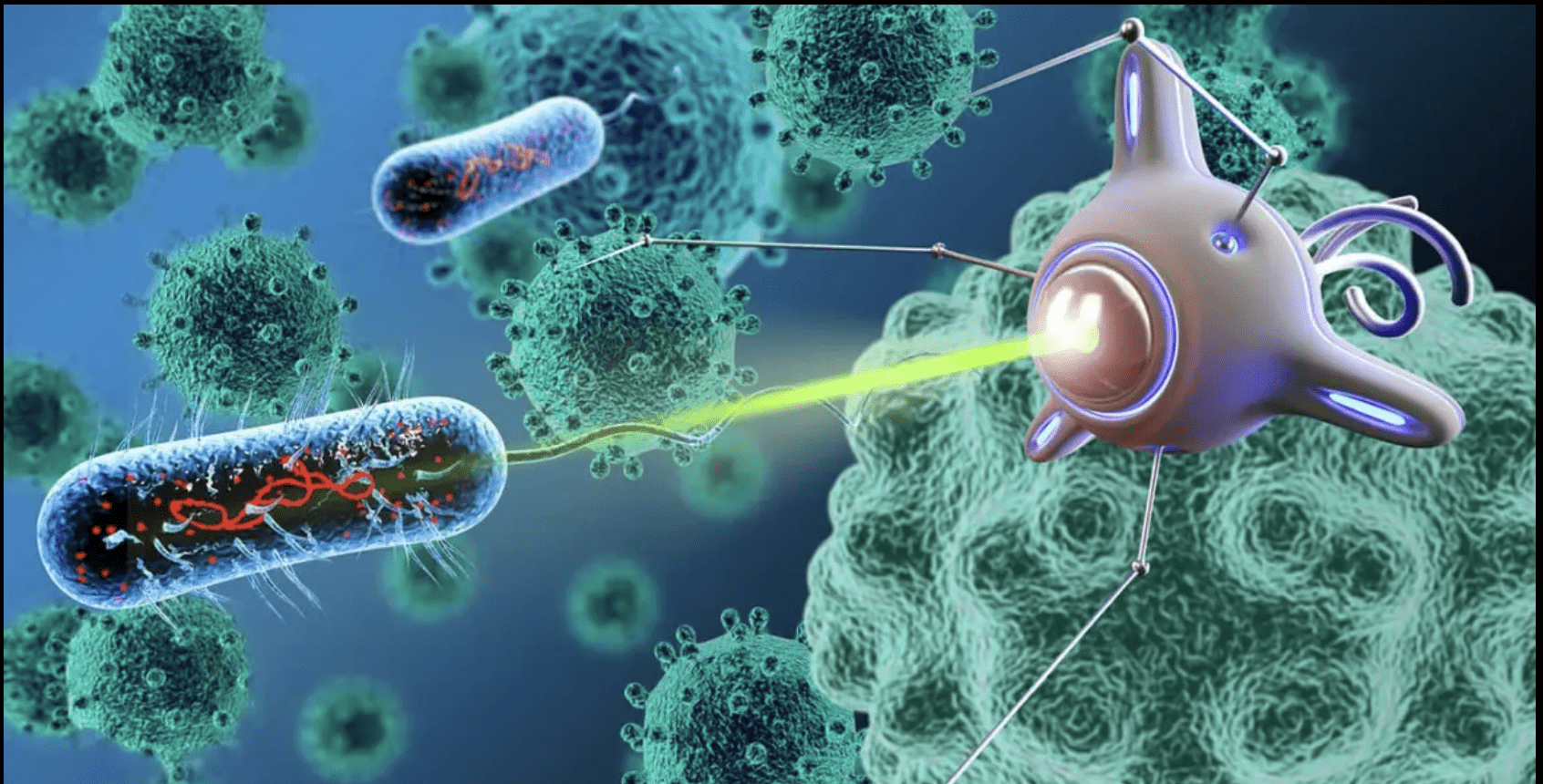
0.1 Context: Limitation of current cancer therapies
0.1.1 Delivering medicines deep inside tumours while sparing healthy tissue remains a major challenge.
0.1.2 This limits the promise of targeted and personalised medicine in cancer care.
0.2 What are medical nanobots
0.2.1 Medical nanobots are microscopic robots designed to navigate biological environments.
0.2.2 They can deliver drugs directly to tumours and distinguish cancerous cells from healthy cells.
0.2.3 This enables targeted, minimally invasive therapies with fewer side effects.
0.3 How nanobots reach deep inside cancer tissue
0.3.1 The nanobot mimics bacterial movement using a helix-shaped tail.
0.3.2 It moves like a propeller or corkscrew, allowing travel through blood, dense tissue, and cells.
0.3.3 A magnetic field controls its drilling-like motion, helping precise navigation.
0.4 Design and material composition
0.4.1 The nanobot body is made of silica, which is biocompatible.
0.4.2 The magnetic component is iron, enabling controlled movement.
0.4.3 These materials are already used in medical nanotechnology.
0.5 Precision in targeted therapy delivery
0.5.1 Magnetic fields guide the nanobot exactly to the target tissue.
0.5.2 The nanobot can bind preferentially to cancer cells after penetrating their environment.
0.5.3 It can generate localised heat above 42°C for magnetic hyperthermia, destroying tumour cells while sparing healthy tissue.
0.6 Effectiveness against cancer and bacteria
0.6.1 The nanobot has shown efficacy against ovarian and breast cancer cells, especially deep-seated cancers in dense tissue.
0.6.2 It has also been effective against certain bacteria.
0.6.3 This allows the nanobot itself to act as a therapeutic agent.
0.7 Additional applications beyond cancer
0.7.1 Modified nanobots can act as MRI beacons, helping surgeons pinpoint tumours during procedures.
0.7.2 In dentistry, nanobots are being explored for root canal treatments, where they outperform sodium hypochlorite in safety.
0.7.3 They show potential to rebuild and remineralise teeth, with 100% effectiveness in animal experiments.
0.8 Path to clinical use
0.8.1 Current work is limited to cell cultures.
0.8.2 Animal experiments and clinical trials are required for scientific validation.
0.8.3 Key challenges include cost rationalisation, market adaptation, and clinical acceptance, with US patents already secured.
![UPSC coaching in India - Best UPSC coaching institute - UPSC Mentor coaching - UPSC preparation institute - IAS coaching center - UPSC online coaching - Best IAS coaching in India - UPSC classes for beginners - Civil services preparation - IAS preparation institute - UPSC mentorship program - UPSC exam guidance - IAS study material - UPSC Prelims coaching - UPSC Mains coaching - UPSC interview preparation - Best IAS online classes - UPSC coaching with personal mentorship - Affordable UPSC coaching - UPSC test series - UPSC coaching near me - Best IAS coaching near me - UPSC institute in [your city] - IAS coaching center in [your city] - The UPSC Mentor coaching - The UPSC Mentor IAS classes - The UPSC Mentor UPSC course - UPSC Mentor online program.](https://theupscmentor.in/wp-content/uploads/2025/11/cropped-THE-UPSC-1.png)