![http://UPSC%20coaching%20in%20India%20-%20Best%20UPSC%20coaching%20institute%20-%20UPSC%20Mentor%20coaching%20-%20UPSC%20preparation%20institute%20-%20IAS%20coaching%20center%20-%20UPSC%20online%20coaching%20-%20Best%20IAS%20coaching%20in%20India%20-%20UPSC%20classes%20for%20beginners%20-%20Civil%20services%20preparation%20-%20IAS%20preparation%20institute%20-%20UPSC%20mentorship%20program%20-%20UPSC%20exam%20guidance%20-%20IAS%20study%20material%20-%20UPSC%20Prelims%20coaching%20-%20UPSC%20Mains%20coaching%20-%20UPSC%20interview%20preparation%20-%20Best%20IAS%20online%20classes%20-%20UPSC%20coaching%20with%20personal%20mentorship%20-%20Affordable%20UPSC%20coaching%20-%20UPSC%20test%20series%20-%20UPSC%20coaching%20near%20me%20-%20Best%20IAS%20coaching%20near%20me%20-%20UPSC%20institute%20in%20[your%20city]%20-%20IAS%20coaching%20center%20in%20[your%20city]%20-%20The%20UPSC%20Mentor%20coaching%20-%20The%20UPSC%20Mentor%20IAS%20classes%20-%20The%20UPSC%20Mentor%20UPSC%20course%20-%20UPSC%20Mentor%20online%20program.](https://theupscmentor.in/wp-content/uploads/2024/11/THE-UPSC-2-e1762319162137.png)
 admin
admin 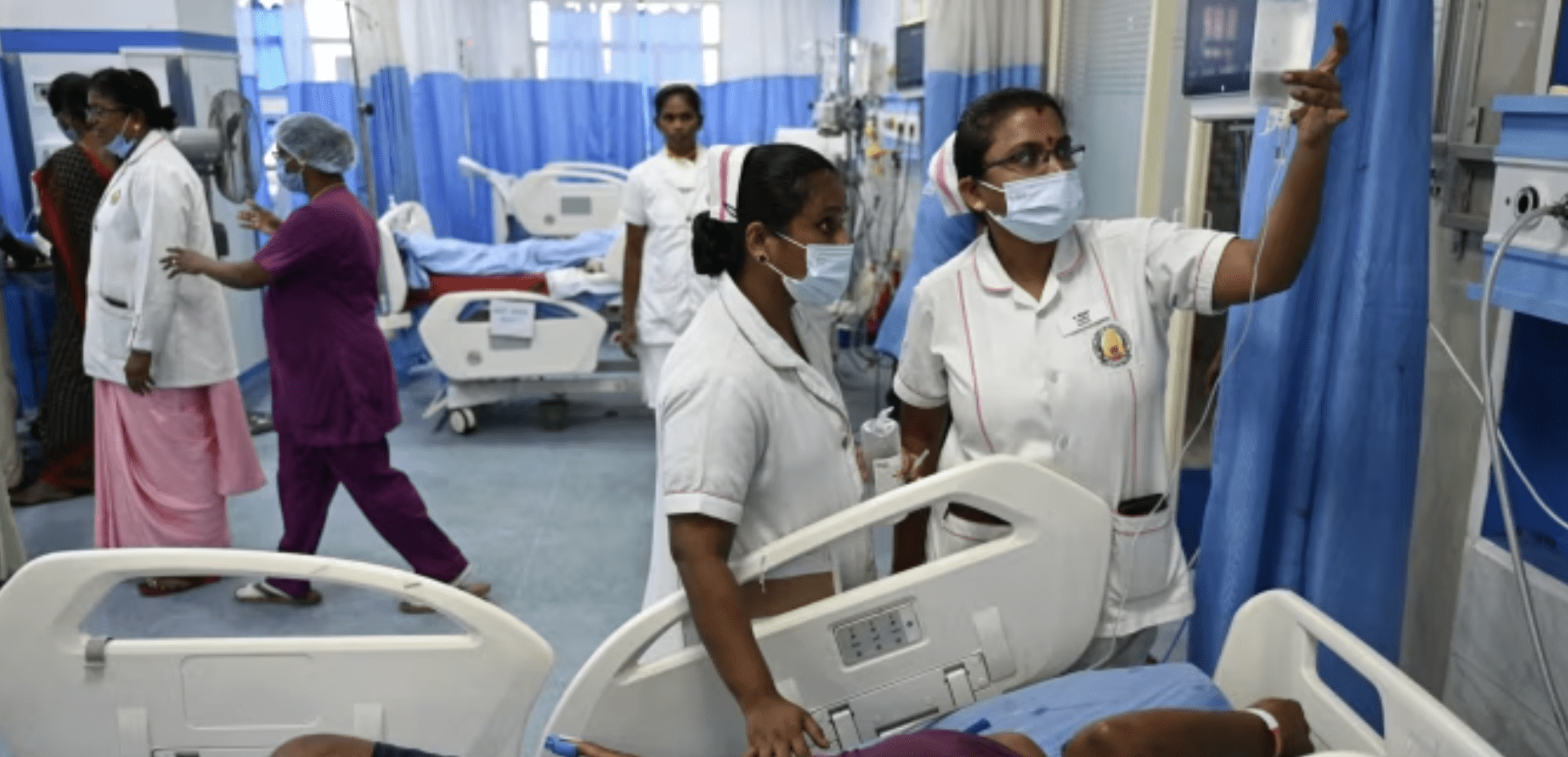
0.1 Core condition of India’s public health system
0.1.1 India’s public health system suffers from chronic underfunding, increasing privatisation, weak policy design, and deep social inequalities.
0.1.2 As a result, access to good quality healthcare remains a privilege rather than a right, affordable only to a small section of the population.
0.1.3 Class, caste, religion, gender, and other social markers strongly influence who falls ill, how long they live, and how much suffering they endure.
0.2 Rising disease burden and policy failure
0.2.1 The consumption of ultra-processed foods is driving a rise in non-communicable diseases.
0.2.2 Unchecked air, water, and soil pollution, combined with climate change, is pushing millions into illness.
0.2.3 These outcomes are linked not only to individual behaviour but to systemic policy gaps and regulatory failures.
0.3 Conditions faced by healthcare workers
0.3.1 ASHA workers continue to struggle for basic rights, while working conditions in most public hospitals remain poor.
0.3.2 Healthcare providers face increasing pressure in overcrowded facilities with limited resources, making quality care difficult.
0.4 How privatisation weakens public healthcare
0.4.1 Privatisation has expanded rapidly, with private equity increasingly driving healthcare delivery.
0.4.2 Doctors in private systems are often expected to meet monthly targets, treating healthcare like a profit-oriented service.
0.4.3 Public money is increasingly diverted to the private sector through schemes such as AB PMJAY and public-private partnerships.
0.4.4 This transfer of public funds further weakens the public health system instead of strengthening it.
0.5 Impact on medical education and doctors
0.5.1 Private medical colleges charge very high fees, forcing students to prioritise income recovery over public service.
0.5.2 Medical education has increasingly become exam-oriented, focused on memorisation and MCQs, rather than clinical skill and social understanding.
0.5.3 An MBBS degree is often seen as insufficient, pushing doctors into costly postgraduate training to secure employment or respectability.
0.6 Health as a commodity, not a public good
0.6.1 As health and healthcare become expensive commodities, public healthcare continues to erode.
0.6.2 Solutions such as increasing health budgets, strengthening primary care, and regulating privatisation are frequently discussed but rarely implemented meaningfully.
0.6.3 Policy implementation depends on political will, which remains weak and apathetic.
0.7 Doctors as witnesses to structural suffering
0.7.1 Doctors see daily how poverty becomes malnutrition, unsafe roads become trauma, and weak regulation becomes disease.
0.7.2 This proximity to suffering gives doctors moral authority and social credibility across class and institutional boundaries.
0.8 Medicine as a social science
0.8.1 The idea that medicine extends beyond biology to social conditions is not new.
0.8.2 Rudolf Virchow argued that disease is shaped by power, housing, hunger, education, and exclusion, not only pathogens.
0.8.3 He described the physician as the “natural attorney of the poor,” with responsibility beyond the clinic.
0.9 Doctors and political engagement
0.9.1 Virchow entered politics to push for sanitation, clean water, education, and public health infrastructure.
0.9.2 He opposed militarisation and argued that state resources should prioritise health and welfare.
0.9.3 His work demonstrated how medical knowledge can inform policy and structural reform.
1.0 Doctors confronting injustice globally
1.0.1 Physicians have historically challenged political violence, authoritarianism, and structural injustice.
1.0.2 During apartheid in South Africa, doctors exposed racial discrimination in healthcare and opposed state violence.
1.0.3 Such actions affirmed that neutrality in the face of injustice contradicts medical ethics.
1.1 Indian examples of doctors as social reformers
1.1.1 Dr. Muthulakshmi Reddy used her medical authority to fight child marriage, devadasi practices, and exclusion of women from education.
1.1.2 Her work shows how doctors can advance gender justice, social reform, and public welfare beyond clinical settings.
1.2 Political accountability and uncomfortable questions
1.2.1 Doctors must question why outpatient departments are overcrowded and why patients arrive at advanced stages of disease.
1.2.2 They must ask why medicines are unaffordable, why treatments are ineffective when affordable, and why preventable diseases persist.
1.2.3 Persistent problems in cancer care, dialysis access, anaemia, road injuries, tuberculosis, tobacco, and alcohol reflect policy failure rather than medical ignorance.
1.3 Why suffering remains normalised
1.3.1 Effective policies often do not exist, or remain confined to paper without implementation.
1.3.2 This reflects complacency and complicity among those in power.
1.3.3 Multiple industries continue to prioritise profit over health, often enabled or protected by the state.
1.4 The “leaking bucket” analogy
1.4.1 India’s health system resembles a bucket meant to contain suffering.
0.4.2 Instead of fixing the holes, attention is focused on better tools to manage the spill.
0.4.3 The holes represent unchecked privatisation, weak regulation, and chronic underfunding.
![UPSC coaching in India - Best UPSC coaching institute - UPSC Mentor coaching - UPSC preparation institute - IAS coaching center - UPSC online coaching - Best IAS coaching in India - UPSC classes for beginners - Civil services preparation - IAS preparation institute - UPSC mentorship program - UPSC exam guidance - IAS study material - UPSC Prelims coaching - UPSC Mains coaching - UPSC interview preparation - Best IAS online classes - UPSC coaching with personal mentorship - Affordable UPSC coaching - UPSC test series - UPSC coaching near me - Best IAS coaching near me - UPSC institute in [your city] - IAS coaching center in [your city] - The UPSC Mentor coaching - The UPSC Mentor IAS classes - The UPSC Mentor UPSC course - UPSC Mentor online program.](https://theupscmentor.in/wp-content/uploads/2025/11/cropped-THE-UPSC-1.png)