![http://UPSC%20coaching%20in%20India%20-%20Best%20UPSC%20coaching%20institute%20-%20UPSC%20Mentor%20coaching%20-%20UPSC%20preparation%20institute%20-%20IAS%20coaching%20center%20-%20UPSC%20online%20coaching%20-%20Best%20IAS%20coaching%20in%20India%20-%20UPSC%20classes%20for%20beginners%20-%20Civil%20services%20preparation%20-%20IAS%20preparation%20institute%20-%20UPSC%20mentorship%20program%20-%20UPSC%20exam%20guidance%20-%20IAS%20study%20material%20-%20UPSC%20Prelims%20coaching%20-%20UPSC%20Mains%20coaching%20-%20UPSC%20interview%20preparation%20-%20Best%20IAS%20online%20classes%20-%20UPSC%20coaching%20with%20personal%20mentorship%20-%20Affordable%20UPSC%20coaching%20-%20UPSC%20test%20series%20-%20UPSC%20coaching%20near%20me%20-%20Best%20IAS%20coaching%20near%20me%20-%20UPSC%20institute%20in%20[your%20city]%20-%20IAS%20coaching%20center%20in%20[your%20city]%20-%20The%20UPSC%20Mentor%20coaching%20-%20The%20UPSC%20Mentor%20IAS%20classes%20-%20The%20UPSC%20Mentor%20UPSC%20course%20-%20UPSC%20Mentor%20online%20program.](https://theupscmentor.in/wp-content/uploads/2024/11/THE-UPSC-2-e1762319162137.png)
 admin
admin 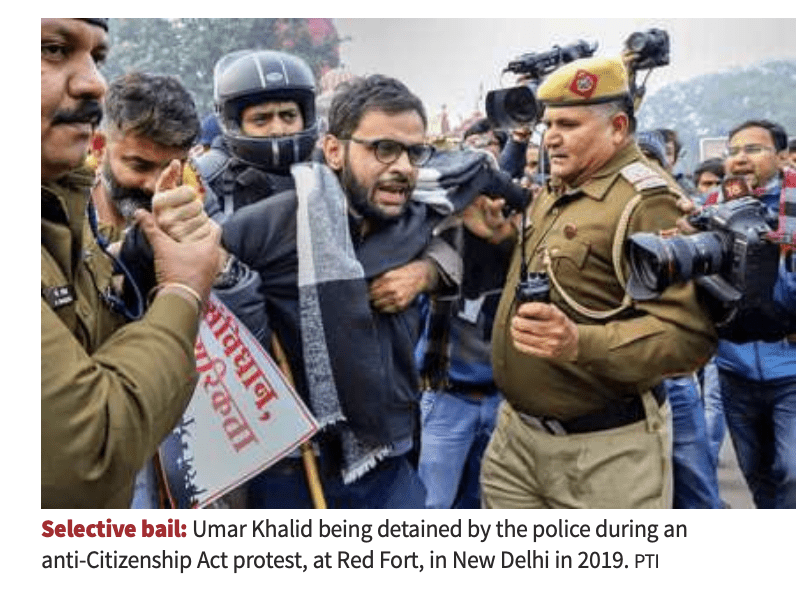
Context: Why is this news being discussed?
0.1 Supreme Court decision
0.1.1 The Supreme Court, on January 5, refused to grant bail to Umar Khalid and Sharjeel Imam.
0.1.2 Both are student activists accused in the 2020 Delhi riots conspiracy case.
0.1.3 They have been incarcerated for nearly six years, even though the trial has not commenced.
0.2 Why the case attracted attention
0.2.1 Bail was granted to five other co-accused in the same case.
0.2.2 Bail was denied specifically to Umar Khalid and Sharjeel Imam under the UAPA.
0.2.3 The court therefore examined why the two were treated differently.
Why was bail denied to Umar Khalid and Sharjeel Imam?
1.1 Stricter bail regime under UAPA
1.1.1 The court held that personal liberty is not absolute.
1.1.2 Special statutes like the Unlawful Activities (Prevention) Act (UAPA) prescribe a more stringent bail framework.
1.1.3 Under Section 43D(5) of UAPA, bail is barred if a prima facie case exists against the accused.
1.2 “Qualitatively different footing”
1.2.1 The court placed Umar Khalid and Sharjeel Imam on a “qualitatively different footing” from the other accused.
1.2.2 This required a separate assessment of their alleged roles and culpability.
1.3 Hierarchy of roles in the alleged offence
1.3.1 The court identified a hierarchy of participation among the accused.
1.3.2 Umar Khalid and Sharjeel Imam were described as “ideological drivers” who allegedly:
- 1.3.2.1 Devised the protest strategy
- 1.3.2.2 Sought to convert protests against the Citizenship (Amendment) Act into disruptive road blockades
- 1.3.2.3 Aimed at paralysing the national capital
1.3.3 By contrast, the five co-accused granted bail were described as “local-level facilitators”.
1.3.4 Their roles were limited to logistical arrangements and were considered derivative in nature.
1.4 Why prolonged incarceration did not justify bail
1.4.1 The accused argued that nearly six years of incarceration without trial violated Article 21.
1.4.2 The court rejected this argument, stating that:
- 1.4.2.1 There is no mechanical rule that delay alone overrides UAPA’s bail restrictions
- 1.4.2.2 Section 43D(5) sets a statutorily high threshold distinct from ordinary criminal law
- 1.4.2.3 Trial delay was not solely attributable to the prosecution, as multiple procedural objections were raised by the defence
1.5 Broad interpretation of “terrorist act” under UAPA
1.5.1 The defence argued that road blockades and chakka jams are constitutionally protected forms of protest.
1.5.2 The court rejected this submission and held that:
- 1.5.2.1 Section 15 of UAPA covers acts committed by “any other means”, not only by weapons
- 1.5.2.2 Acts resulting in sustained choking of arterial roads may amount to systemic disruption of civic life
- 1.5.2.3 Such acts can attract UAPA if they threaten economic security or essential services
1.5.3 The court also noted that such blockades were timed to coincide with major international events.
1.6 Limited window left open for future bail
1.6.1 The court did not completely foreclose the possibility of bail.
1.6.2 It permitted the accused to approach the trial court for bail:
- 1.6.2.1 After completion of the examination of protected witnesses, or
- 1.6.2.2 After one year from the date of the ruling, whichever is earlier
![UPSC coaching in India - Best UPSC coaching institute - UPSC Mentor coaching - UPSC preparation institute - IAS coaching center - UPSC online coaching - Best IAS coaching in India - UPSC classes for beginners - Civil services preparation - IAS preparation institute - UPSC mentorship program - UPSC exam guidance - IAS study material - UPSC Prelims coaching - UPSC Mains coaching - UPSC interview preparation - Best IAS online classes - UPSC coaching with personal mentorship - Affordable UPSC coaching - UPSC test series - UPSC coaching near me - Best IAS coaching near me - UPSC institute in [your city] - IAS coaching center in [your city] - The UPSC Mentor coaching - The UPSC Mentor IAS classes - The UPSC Mentor UPSC course - UPSC Mentor online program.](https://theupscmentor.in/wp-content/uploads/2025/11/cropped-THE-UPSC-1.png)