![http://UPSC%20coaching%20in%20India%20-%20Best%20UPSC%20coaching%20institute%20-%20UPSC%20Mentor%20coaching%20-%20UPSC%20preparation%20institute%20-%20IAS%20coaching%20center%20-%20UPSC%20online%20coaching%20-%20Best%20IAS%20coaching%20in%20India%20-%20UPSC%20classes%20for%20beginners%20-%20Civil%20services%20preparation%20-%20IAS%20preparation%20institute%20-%20UPSC%20mentorship%20program%20-%20UPSC%20exam%20guidance%20-%20IAS%20study%20material%20-%20UPSC%20Prelims%20coaching%20-%20UPSC%20Mains%20coaching%20-%20UPSC%20interview%20preparation%20-%20Best%20IAS%20online%20classes%20-%20UPSC%20coaching%20with%20personal%20mentorship%20-%20Affordable%20UPSC%20coaching%20-%20UPSC%20test%20series%20-%20UPSC%20coaching%20near%20me%20-%20Best%20IAS%20coaching%20near%20me%20-%20UPSC%20institute%20in%20[your%20city]%20-%20IAS%20coaching%20center%20in%20[your%20city]%20-%20The%20UPSC%20Mentor%20coaching%20-%20The%20UPSC%20Mentor%20IAS%20classes%20-%20The%20UPSC%20Mentor%20UPSC%20course%20-%20UPSC%20Mentor%20online%20program.](https://theupscmentor.in/wp-content/uploads/2024/11/THE-UPSC-2-e1762319162137.png)
 admin
admin 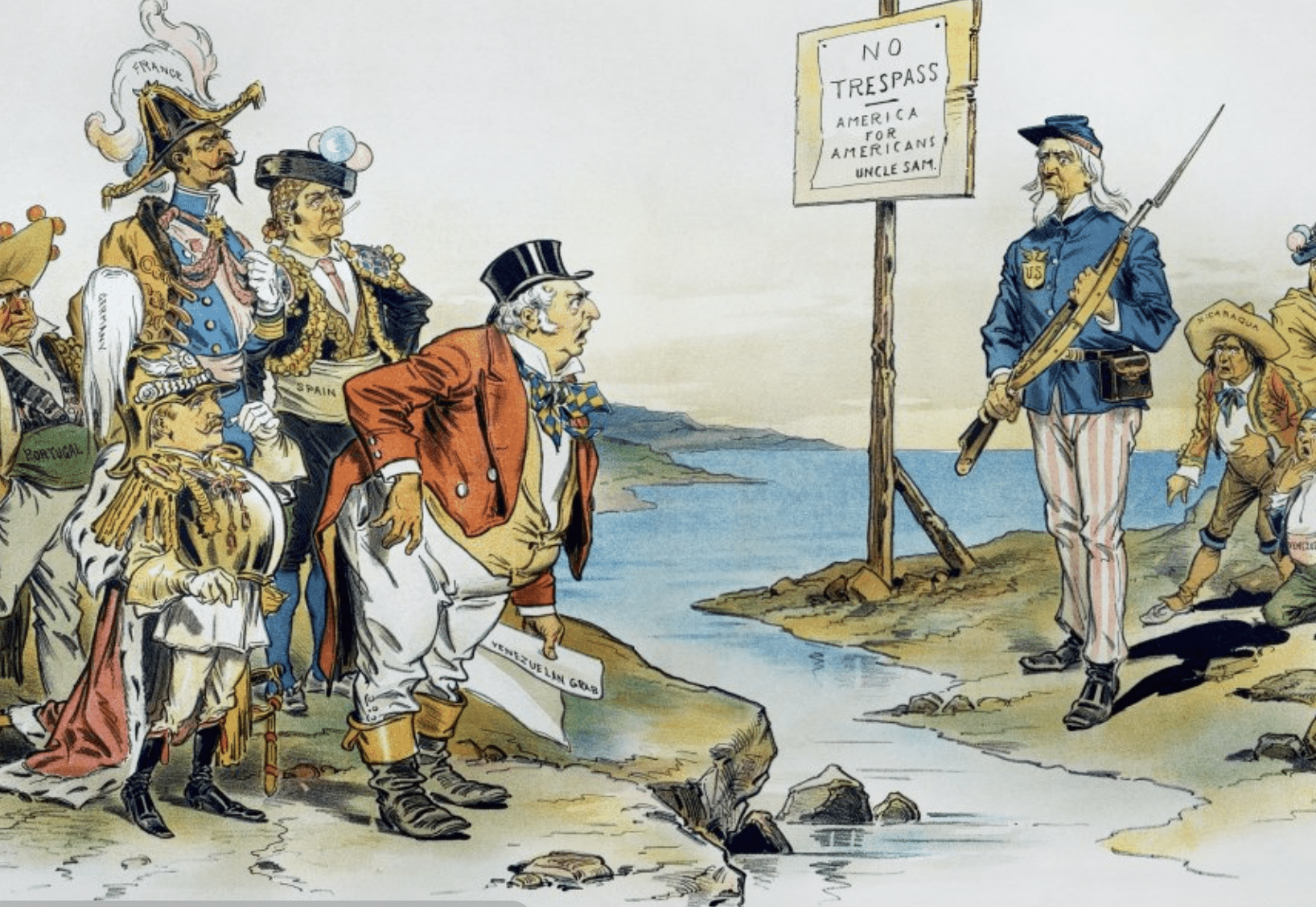
0.1 Core Context
0.1.1 The article argues that the Monroe Doctrine, though over 200 years old, has been revived in a coercive and unilateral form.
0.1.2 This revival is associated with U.S. President Donald Trump, giving rise to what is termed the “Donroe Doctrine”.
0.1.3 The doctrine reflects a departure from the post-1945 rules-based international order.
0.2 Triggering Event
0.2.1 In early 2026, U.S. airborne forces abducted Venezuelan President Nicolás Maduro and his wife.
0.2.2 They were incarcerated in the U.S. on charges of undermining U.S. security.
0.2.3 This act is being justified by the U.S. as a doctrinal assertion, not an aberration.
0.2.4 The action is widely viewed as the first explicit operationalisation of the Donroe Doctrine.
0.3 Nature of the Donroe Doctrine
0.3.1 The Donroe Doctrine is a modern reinterpretation of the 1823 Monroe Doctrine.
0.3.2 It asserts the U.S. as the sole security guarantor of the Western Hemisphere.
0.3.3 It rejects external interference by non-hemispheric powers.
0.3.4 The doctrine legitimises direct intervention, even regime-level actions, in the name of security.
0.4 Institutional Backing
0.4.1 The U.S. National Security Strategy (November 2025) explicitly reaffirms U.S. pre-eminence in the Western Hemisphere.
0.4.2 It seeks to deny rival powers the ability to position forces or threaten U.S. assets in the hemisphere.
0.4.3 The Venezuela operation reflects a deliberate, doctrine-backed manoeuvre, not impulsive action.
0.4.4 The approach mirrors updated “shock and awe” tactics adapted to geopolitical coercion.
0.5 Impact on the International Order
0.5.1 Global protests against the violation of Venezuelan sovereignty have been muted.
0.5.2 This silence suggests erosion of collective enforcement of international norms.
0.5.3 The article argues that the post-1945 international order is effectively weakened.
0.5.4 The global system increasingly resembles a “free-for-all”, governed by power rather than rules.
0.6 Precedent Effect
0.6.1 The Donroe Doctrine sets a dangerous precedent for unilateral action.
0.6.2 Other powers may cite similar logic to justify actions within their claimed spheres of influence.
0.6.3 The article explicitly links this to China’s claim over Taiwan and Russia’s regional assertions.
0.6.4 Norm erosion thus becomes systemic, not isolated.
0.7 Implications for India
0.7.1 India faces a world where great powers openly privilege coercion over consent.
0.7.2 The weakening of international norms reduces strategic predictability for middle powers.
0.7.3 India’s challenge lies in navigating a system where doctrines override multilateral restraint.
0.7.4 Strategic autonomy must now operate in a less rule-bound, more transactional global order.
0.8 Central Takeaway
0.8.1 The Donroe Doctrine symbolises the normalisation of unilateral intervention.
0.8.2 It marks a shift from rules-based order to power-based enforcement.
0.8.3 For India, the lesson is clear: institutional guarantees are weakening, and caution is indispensable.
![UPSC coaching in India - Best UPSC coaching institute - UPSC Mentor coaching - UPSC preparation institute - IAS coaching center - UPSC online coaching - Best IAS coaching in India - UPSC classes for beginners - Civil services preparation - IAS preparation institute - UPSC mentorship program - UPSC exam guidance - IAS study material - UPSC Prelims coaching - UPSC Mains coaching - UPSC interview preparation - Best IAS online classes - UPSC coaching with personal mentorship - Affordable UPSC coaching - UPSC test series - UPSC coaching near me - Best IAS coaching near me - UPSC institute in [your city] - IAS coaching center in [your city] - The UPSC Mentor coaching - The UPSC Mentor IAS classes - The UPSC Mentor UPSC course - UPSC Mentor online program.](https://theupscmentor.in/wp-content/uploads/2025/11/cropped-THE-UPSC-1.png)