![http://UPSC%20coaching%20in%20India%20-%20Best%20UPSC%20coaching%20institute%20-%20UPSC%20Mentor%20coaching%20-%20UPSC%20preparation%20institute%20-%20IAS%20coaching%20center%20-%20UPSC%20online%20coaching%20-%20Best%20IAS%20coaching%20in%20India%20-%20UPSC%20classes%20for%20beginners%20-%20Civil%20services%20preparation%20-%20IAS%20preparation%20institute%20-%20UPSC%20mentorship%20program%20-%20UPSC%20exam%20guidance%20-%20IAS%20study%20material%20-%20UPSC%20Prelims%20coaching%20-%20UPSC%20Mains%20coaching%20-%20UPSC%20interview%20preparation%20-%20Best%20IAS%20online%20classes%20-%20UPSC%20coaching%20with%20personal%20mentorship%20-%20Affordable%20UPSC%20coaching%20-%20UPSC%20test%20series%20-%20UPSC%20coaching%20near%20me%20-%20Best%20IAS%20coaching%20near%20me%20-%20UPSC%20institute%20in%20[your%20city]%20-%20IAS%20coaching%20center%20in%20[your%20city]%20-%20The%20UPSC%20Mentor%20coaching%20-%20The%20UPSC%20Mentor%20IAS%20classes%20-%20The%20UPSC%20Mentor%20UPSC%20course%20-%20UPSC%20Mentor%20online%20program.](https://theupscmentor.in/wp-content/uploads/2024/11/THE-UPSC-2-e1762319162137.png)
 admin
admin 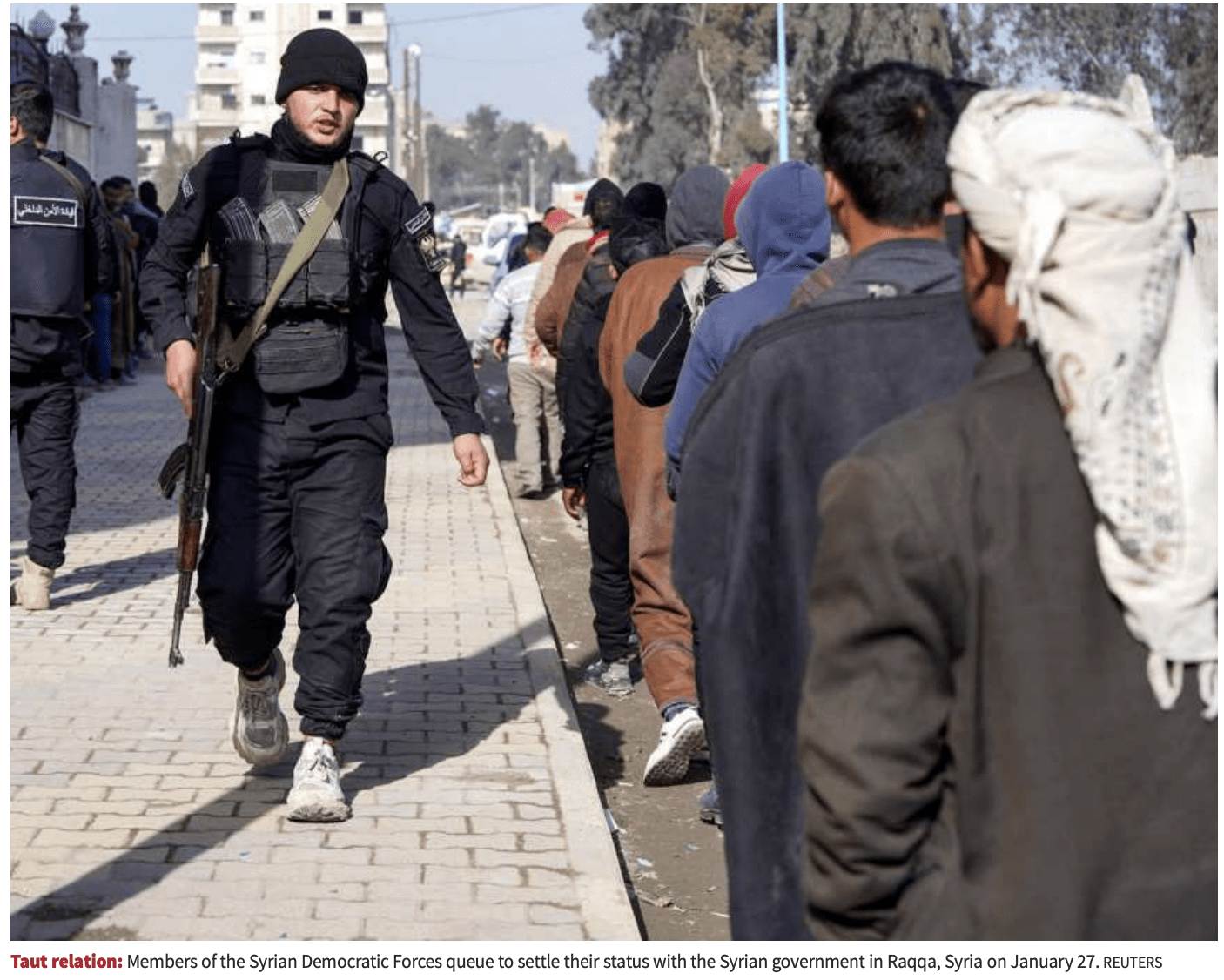
1. Background: Syrian Civil War Context
1.1 After the Assad regime withdrew forces from Syria’s northeast in 2012, Kurdish groups filled the vacuum.
1.2 Kurdish regions declared autonomy and established the Democratic Autonomous Administration of North and East Syria (DAANES), also known as Rojava.
1.3 Autonomy expanded during the fight against Islamic State (IS) after 2014.
2. Who are the Main Kurdish Actors?
2.1 Kurds constitute around 10% of Syria’s population.
2.2 Political leadership is led by the Democratic Union Party (PYD), inspired by “democratic confederalism”.
2.3 Armed wing: People’s Protection Units (YPG), with women’s brigades playing a key role.
2.4 The Syrian Democratic Forces (SDF) was formed in 2015 with U.S. backing, combining Kurds and Arab militias.
3. Why Did the Fighting Resume?
3.1 After Assad’s regime stabilised militarily, it sought to reassert sovereignty over Kurdish regions.
3.2 The Sharaa-Abdi integration agreement promised Kurdish integration into the Syrian state.
3.3 Deadlines lapsed without progress, leading Damascus to deploy troops into Kurdish-controlled areas.
3.4 Fighting broke out in and around Aleppo and northeastern Syria, forcing SDF withdrawals.
4. What Does Damascus Want?
4.1 End Kurdish autonomy and reintegrate all territories under central control.
4.2 Incorporate Kurdish administrative and military structures into the Syrian state.
4.3 Gain control over border crossings, oil and gas fields, and security apparatus.
4.4 Offer limited cultural concessions (recognition of Kurdish language and Newroz holiday) without political autonomy.
5. Why Did the Sharaa-Abdi Agreement Falter?
5.1 Syrian government insisted on full territorial and military control.
5.2 Kurdish leadership feared loss of hard-won autonomy.
5.3 Lack of clarity on degree of decentralisation and military integration.
5.4 Continued troop deployments undermined trust.
6. Türkiye’s Position
6.1 Türkiye views PYD and YPG as extensions of the PKK, designated a terrorist organisation by Ankara.
6.2 Sees Kurdish autonomy as a security threat along its southern border.
6.3 Supports Damascus’ efforts to dismantle Kurdish military structures.
6.4 Has previously conducted cross-border operations to push Kurdish forces away from the border.
7. U.S. Position
7.1 U.S. backed the SDF primarily to defeat IS.
7.2 Maintains around 900 troops in northeastern Syria.
7.3 Has cooled relations with Damascus after Assad’s consolidation of power.
7.4 Shares common ground with Türkiye on preventing Kurdish secession, while still engaging SDF tactically.
8. Ceasefire and Integration Deal (January 18)
8.1 SDF commander Mazloum Abdi agreed to a ceasefire and integration framework.
8.2 Agreement demands handover of Raqqa and Deir al-Zour “administratively and militarily”.
8.3 Calls for integration of SDF structures into Syrian government institutions.
8.4 Transfer of border crossings and energy resources to Damascus.
9. What Lies Ahead?
9.1 Syrian forces advancing toward Arab-majority areas between Aleppo and the Euphrates.
9.2 SDF positions collapsing in Raqqa and Deir al-Zour.
9.3 Internal cracks emerging within SDF, including desertions.
9.4 Kurds resisting full disarmament and demanding protection of autonomy.
9.5 Kurdish fighters preparing for renewed resistance, especially in Kobane and Hassaka.
![UPSC coaching in India - Best UPSC coaching institute - UPSC Mentor coaching - UPSC preparation institute - IAS coaching center - UPSC online coaching - Best IAS coaching in India - UPSC classes for beginners - Civil services preparation - IAS preparation institute - UPSC mentorship program - UPSC exam guidance - IAS study material - UPSC Prelims coaching - UPSC Mains coaching - UPSC interview preparation - Best IAS online classes - UPSC coaching with personal mentorship - Affordable UPSC coaching - UPSC test series - UPSC coaching near me - Best IAS coaching near me - UPSC institute in [your city] - IAS coaching center in [your city] - The UPSC Mentor coaching - The UPSC Mentor IAS classes - The UPSC Mentor UPSC course - UPSC Mentor online program.](https://theupscmentor.in/wp-content/uploads/2025/11/cropped-THE-UPSC-1.png)