![http://UPSC%20coaching%20in%20India%20-%20Best%20UPSC%20coaching%20institute%20-%20UPSC%20Mentor%20coaching%20-%20UPSC%20preparation%20institute%20-%20IAS%20coaching%20center%20-%20UPSC%20online%20coaching%20-%20Best%20IAS%20coaching%20in%20India%20-%20UPSC%20classes%20for%20beginners%20-%20Civil%20services%20preparation%20-%20IAS%20preparation%20institute%20-%20UPSC%20mentorship%20program%20-%20UPSC%20exam%20guidance%20-%20IAS%20study%20material%20-%20UPSC%20Prelims%20coaching%20-%20UPSC%20Mains%20coaching%20-%20UPSC%20interview%20preparation%20-%20Best%20IAS%20online%20classes%20-%20UPSC%20coaching%20with%20personal%20mentorship%20-%20Affordable%20UPSC%20coaching%20-%20UPSC%20test%20series%20-%20UPSC%20coaching%20near%20me%20-%20Best%20IAS%20coaching%20near%20me%20-%20UPSC%20institute%20in%20[your%20city]%20-%20IAS%20coaching%20center%20in%20[your%20city]%20-%20The%20UPSC%20Mentor%20coaching%20-%20The%20UPSC%20Mentor%20IAS%20classes%20-%20The%20UPSC%20Mentor%20UPSC%20course%20-%20UPSC%20Mentor%20online%20program.](https://theupscmentor.in/wp-content/uploads/2024/11/THE-UPSC-2-e1762319162137.png)
 admin
admin 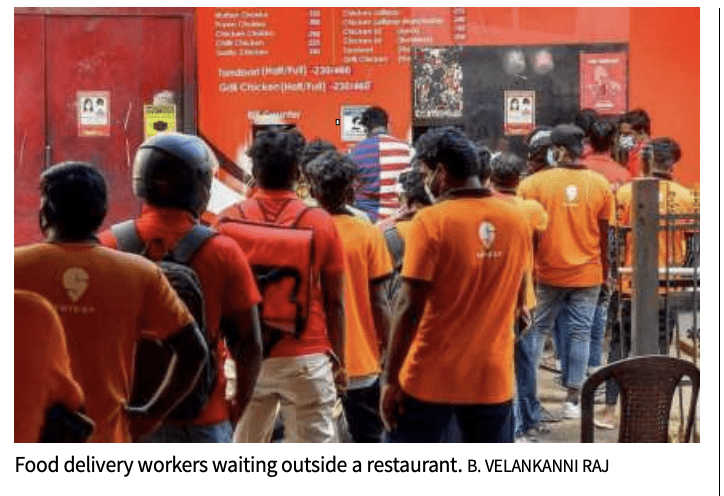
0.1 Core question behind the debate
0.1.1 The debate is not about consumer convenience alone but about the working conditions of gig and platform workers.
0.1.2 The 10-minute delivery model intensifies speed pressures on workers without providing proportional benefits.
0.1.3 The central issue is whether faster delivery justifies increased insecurity and risk for workers.
0.2 Why workers are protesting rapid delivery models
0.2.1 Gig workers face unstable pay, unpredictable rules, and algorithm-based control.
0.2.2 Worker IDs can be blocked instantly by apps, cutting off income without explanation or appeal.
0.2.3 The pressure of ultra-fast delivery increases physical risk, stress, and income volatility.
0.2.4 Speed is achieved not through technology alone but by extracting more labour from workers.
0.3 Is 10-minute delivery a real consumer need?
0.3.1 There is little practical difference between delivery in 10 minutes versus 20–30 minutes for essentials.
0.3.2 The push for faster delivery is driven mainly by competition among platforms, not consumer necessity.
0.3.3 The costs of this competition are disproportionately borne by workers rather than companies or consumers.
0.4 Nature of gig work in India
0.4.1 A large share of gig workers are full-time workers, not casual earners.
0.4.2 For many, platform work is the primary source of livelihood, not supplementary income.
0.4.3 Workers seek predictable minimum earnings, fair incentives, and protection from sudden income loss.
0.5 Labour Codes and their limitations
0.5.1 Existing Labour Codes recognise gig workers but provide limited and non-mandatory welfare provisions.
0.5.2 Benefits like accident insurance or maternity support are authorised but not enforceable rights.
0.5.3 Gig workers are excluded from key protections such as minimum wages, regulated working hours, paid leave, and collective bargaining.
0.5.4 Funding mechanisms for social security remain vague and weakly defined.
0.6 Algorithmic control and lack of transparency
0.6.1 Platforms use algorithms to decide task allocation, ratings, penalties, and deactivations.
0.6.2 Workers often do not know why orders drop or why penalties are imposed.
0.6.3 There are no clear grievance redressal or appeal mechanisms against algorithmic decisions.
0.6.4 This creates a system where income and employment depend on opaque digital processes.
0.7 Employment generation versus job quality
0.7.1 Quick commerce has expanded rapidly and created large numbers of jobs.
0.7.2 However, high job creation is accompanied by high attrition, with many workers leaving every month.
0.7.3 Employment growth without security risks creating a disposable workforce rather than stable livelihoods.
0.8 Future of gig work amid automation
0.8.1 Artificial intelligence is expected to replace repetitive, entry-level gig tasks over time.
0.8.2 Without safeguards, workers face increased control, surveillance, and income insecurity.
0.8.3 Faster algorithms may replace workers rather than support them.
0.9 Broader economic implications
0.9.1 India cannot address unemployment only through gig and quick commerce platforms.
0.9.2 Labour-intensive manufacturing and formal sector expansion remain essential.
0.9.3 Over-reliance on gig platforms risks weakening long-term employment stability.
0.10 Core conclusion
0.10.1 The 10-minute delivery model is not an economic necessity but a competitive business choice.
0.10.2 Without stronger regulation, it deepens worker insecurity and inequality.
0.10.3 Protecting employment quality is as important as creating employment quantity.
![UPSC coaching in India - Best UPSC coaching institute - UPSC Mentor coaching - UPSC preparation institute - IAS coaching center - UPSC online coaching - Best IAS coaching in India - UPSC classes for beginners - Civil services preparation - IAS preparation institute - UPSC mentorship program - UPSC exam guidance - IAS study material - UPSC Prelims coaching - UPSC Mains coaching - UPSC interview preparation - Best IAS online classes - UPSC coaching with personal mentorship - Affordable UPSC coaching - UPSC test series - UPSC coaching near me - Best IAS coaching near me - UPSC institute in [your city] - IAS coaching center in [your city] - The UPSC Mentor coaching - The UPSC Mentor IAS classes - The UPSC Mentor UPSC course - UPSC Mentor online program.](https://theupscmentor.in/wp-content/uploads/2025/11/cropped-THE-UPSC-1.png)