![http://UPSC%20coaching%20in%20India%20-%20Best%20UPSC%20coaching%20institute%20-%20UPSC%20Mentor%20coaching%20-%20UPSC%20preparation%20institute%20-%20IAS%20coaching%20center%20-%20UPSC%20online%20coaching%20-%20Best%20IAS%20coaching%20in%20India%20-%20UPSC%20classes%20for%20beginners%20-%20Civil%20services%20preparation%20-%20IAS%20preparation%20institute%20-%20UPSC%20mentorship%20program%20-%20UPSC%20exam%20guidance%20-%20IAS%20study%20material%20-%20UPSC%20Prelims%20coaching%20-%20UPSC%20Mains%20coaching%20-%20UPSC%20interview%20preparation%20-%20Best%20IAS%20online%20classes%20-%20UPSC%20coaching%20with%20personal%20mentorship%20-%20Affordable%20UPSC%20coaching%20-%20UPSC%20test%20series%20-%20UPSC%20coaching%20near%20me%20-%20Best%20IAS%20coaching%20near%20me%20-%20UPSC%20institute%20in%20[your%20city]%20-%20IAS%20coaching%20center%20in%20[your%20city]%20-%20The%20UPSC%20Mentor%20coaching%20-%20The%20UPSC%20Mentor%20IAS%20classes%20-%20The%20UPSC%20Mentor%20UPSC%20course%20-%20UPSC%20Mentor%20online%20program.](https://theupscmentor.in/wp-content/uploads/2024/11/THE-UPSC-2-e1762319162137.png)
 admin
admin 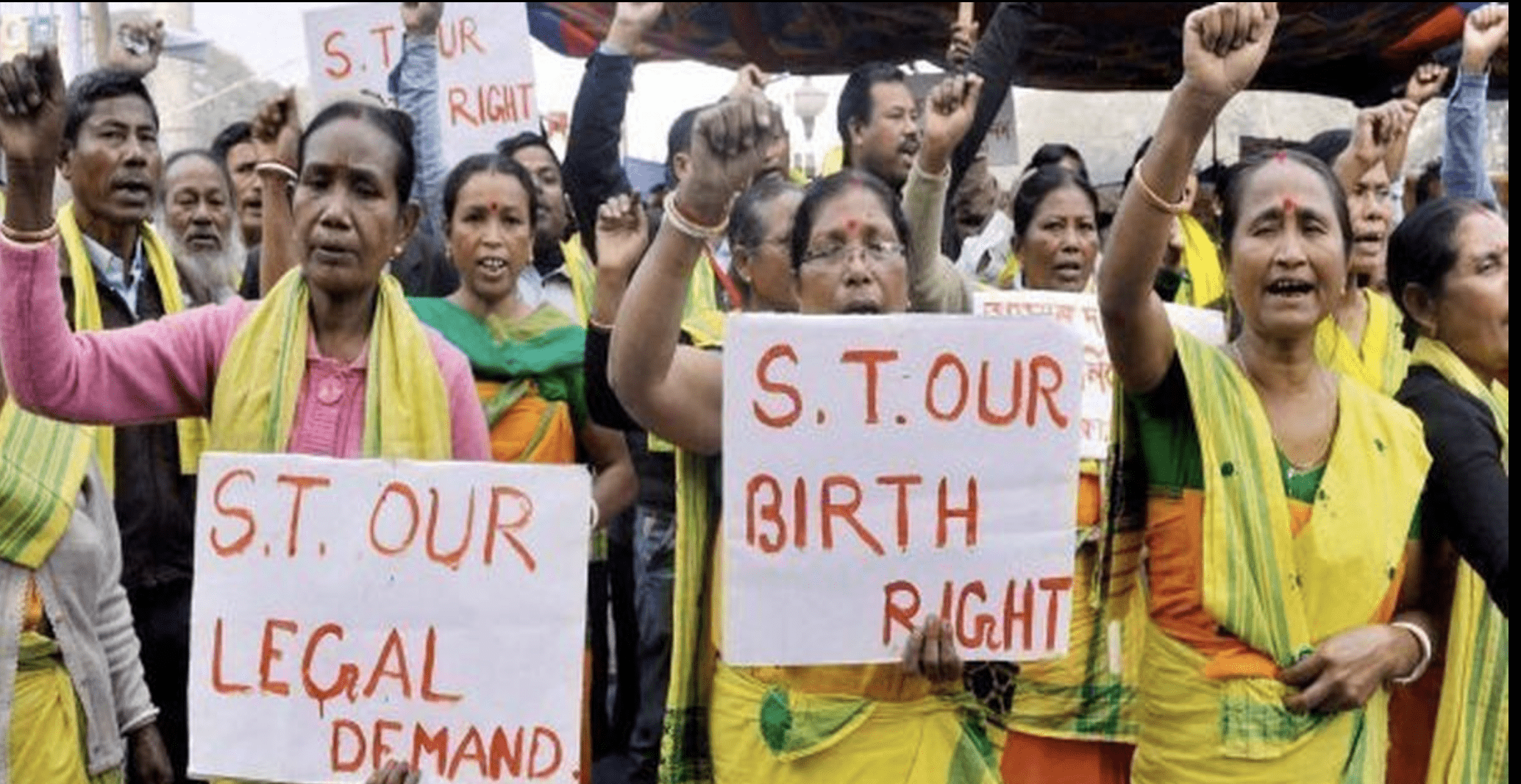
0.1 Core issue behind the controversy
0.1.1 The Assam government has proposed granting Scheduled Tribe (ST) status to six communities that have long demanded this recognition.
0.1.2 Existing ST communities have opposed this move, fearing dilution of their political and reservation rights.
0.1.3 With elections approaching, the issue has become highly politicised and socially sensitive.
0.2 Assam’s existing ST reservation framework
0.2.1 Assam follows a two-category ST system:
0.2.2 ST (Plains) receive 10% reservation, while ST (Hills) receive 5% reservation in state jobs and education.
0.2.3 ST (Hills) mainly include tribes from Karbi Anglong, West Karbi Anglong, and Dima Hasao.
0.2.4 Around 12.4% of Assam’s population is currently classified as ST.
0.2.5 Several Lok Sabha and Assembly seats are reserved exclusively for ST candidates.
0.3 Communities demanding ST status
0.3.1 The six communities demanding ST status are Tai Ahom, Moran, Motok, Chutia, Koch Rajbongshi, and Tea Tribes/Adivasis.
0.3.2 These groups are presently classified under the Other Backward Classes (OBC) category.
0.3.3 Together, they form nearly one-third of Assam’s population, making their inclusion politically significant.
0.4 Assam government’s proposal
0.4.1 The state formed a Group of Ministers (GoM) to examine the demand.
0.4.2 The GoM recommended granting ST status through a three-tier structure instead of merging everyone into existing ST lists.
0.4.3 A new category called ST (Valley) was proposed for larger communities like Ahoms, Chutias, Tea Tribes, and Adivasis.
0.4.4 Smaller groups like Moran and Motok were recommended for inclusion under ST (Plains).
0.4.5 The government assured that existing ST (Plains) and ST (Hills) quotas would remain protected.
0.5 How reservation would be adjusted
0.5.1 The proposed ST (Valley) category would have separate quotas and rosters for state jobs and education.
0.5.2 A proportionate share would be deducted from the 27% OBC quota to accommodate the new ST group.
0.5.3 At the central level, all ST communities would still compete under a single national ST list.
0.6 Why existing ST communities are opposing it
0.6.1 Existing ST groups argue that the six communities were historically identified as OBC, not ST.
0.6.2 They fear that adding large and relatively advanced groups will reduce their share in political representation.
0.6.3 Concerns are especially strong regarding Assembly seats, Autonomous Councils, and Panchayat reservations.
0.6.4 ST groups argue that the demand is driven more by electoral politics than social backwardness.
![UPSC coaching in India - Best UPSC coaching institute - UPSC Mentor coaching - UPSC preparation institute - IAS coaching center - UPSC online coaching - Best IAS coaching in India - UPSC classes for beginners - Civil services preparation - IAS preparation institute - UPSC mentorship program - UPSC exam guidance - IAS study material - UPSC Prelims coaching - UPSC Mains coaching - UPSC interview preparation - Best IAS online classes - UPSC coaching with personal mentorship - Affordable UPSC coaching - UPSC test series - UPSC coaching near me - Best IAS coaching near me - UPSC institute in [your city] - IAS coaching center in [your city] - The UPSC Mentor coaching - The UPSC Mentor IAS classes - The UPSC Mentor UPSC course - UPSC Mentor online program.](https://theupscmentor.in/wp-content/uploads/2025/11/cropped-THE-UPSC-1.png)