![http://UPSC%20coaching%20in%20India%20-%20Best%20UPSC%20coaching%20institute%20-%20UPSC%20Mentor%20coaching%20-%20UPSC%20preparation%20institute%20-%20IAS%20coaching%20center%20-%20UPSC%20online%20coaching%20-%20Best%20IAS%20coaching%20in%20India%20-%20UPSC%20classes%20for%20beginners%20-%20Civil%20services%20preparation%20-%20IAS%20preparation%20institute%20-%20UPSC%20mentorship%20program%20-%20UPSC%20exam%20guidance%20-%20IAS%20study%20material%20-%20UPSC%20Prelims%20coaching%20-%20UPSC%20Mains%20coaching%20-%20UPSC%20interview%20preparation%20-%20Best%20IAS%20online%20classes%20-%20UPSC%20coaching%20with%20personal%20mentorship%20-%20Affordable%20UPSC%20coaching%20-%20UPSC%20test%20series%20-%20UPSC%20coaching%20near%20me%20-%20Best%20IAS%20coaching%20near%20me%20-%20UPSC%20institute%20in%20[your%20city]%20-%20IAS%20coaching%20center%20in%20[your%20city]%20-%20The%20UPSC%20Mentor%20coaching%20-%20The%20UPSC%20Mentor%20IAS%20classes%20-%20The%20UPSC%20Mentor%20UPSC%20course%20-%20UPSC%20Mentor%20online%20program.](https://theupscmentor.in/wp-content/uploads/2024/11/THE-UPSC-2-e1762319162137.png)
 admin
admin 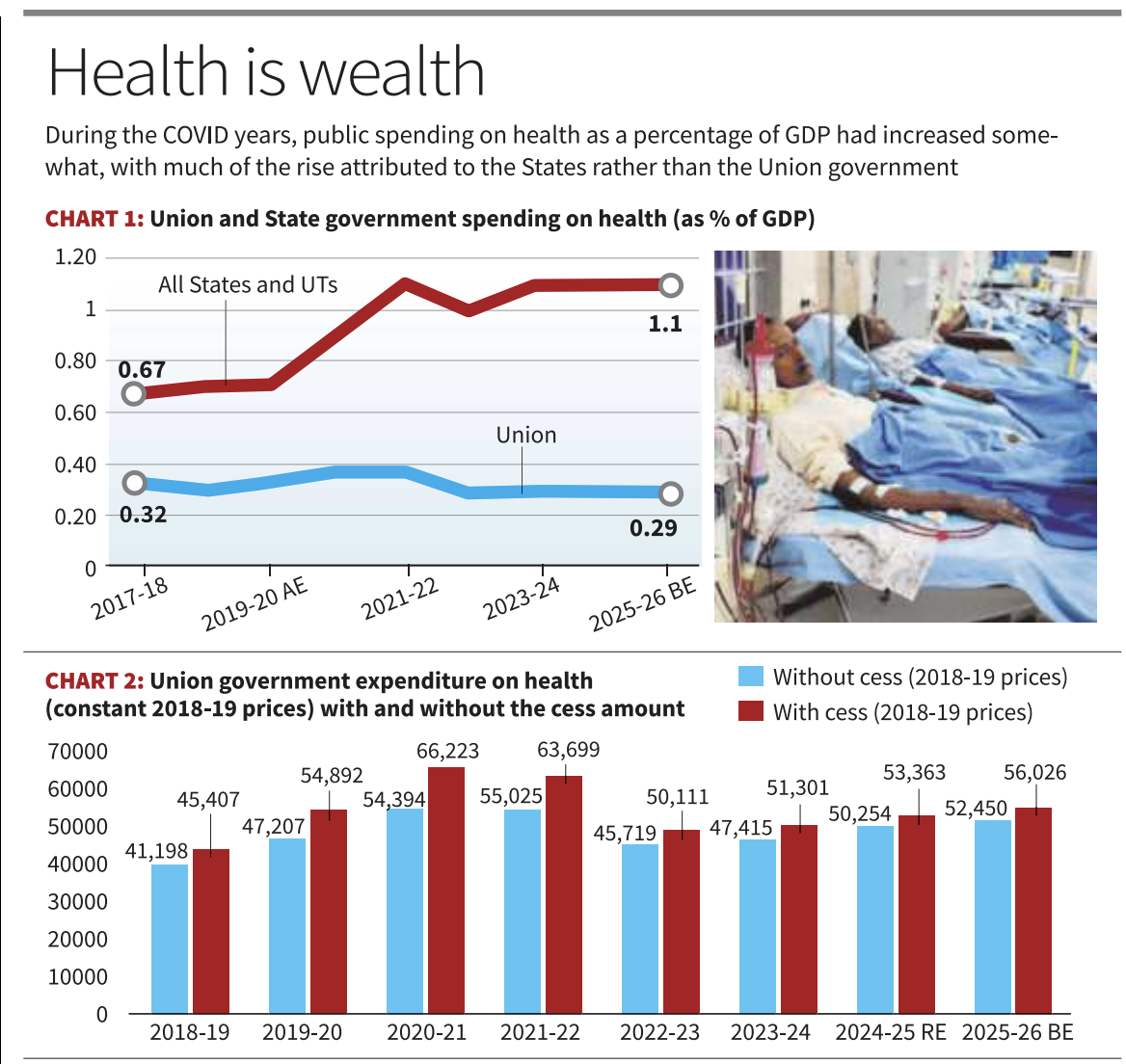
0.1 Original policy promise and current gap
0.1.1 The 2017 National Health Policy committed to raising public health spending to 2.5% of GDP by 2025.
0.1.2 It also proposed that the Union government’s share should be 40% of total public health spending.
0.1.3 This would require the Centre’s spending to rise from about 0.29% of GDP to around 1%, implying a near threefold increase.
0.1.4 The article states this target has not been realised.
0.2 India’s public health spending remains low
0.2.1 Public spending on health in India is described as abysmally low compared to many countries.
0.2.2 Per capita health spending in Britain was 2.5 times India’s, and Sri Lanka’s was three times India’s in 2021.
0.2.3 Other BRICS countries spent 14–15 times more per person than India.
0.2.4 Thailand and Malaysia spent at least 10 times more per capita than India.
0.3 Different trends for States and the Union
0.3.1 During the COVID years, public health spending as a share of GDP rose modestly.
0.3.2 Much of this increase came from State governments rather than the Union government.
0.3.3 Post-COVID, States have sustained or increased their health spending.
0.3.4 RBI data shows health and family welfare spending by States and UTs rose from 0.67% of GDP (2017-18) to 1.1% (2025-26 BE).
0.4 Decline in the Union government’s health spending
0.4.1 In contrast, the Union government’s health spending as a share of GDP has declined post-pandemic.
0.4.2 It fell from 0.37% (2020-21 Actuals) to 0.29% (2025-26 BE).
0.4.3 The Union government’s allocation for health has declined by 22.5% in real terms between 2020-21 and 2023-24.
0.4.4 Health’s share in total Union expenditure declined from 2.26% to 2.05% during this period.
0.5 Impact of inflation and real spending
0.5.1 The Union government’s health allocation in the 2025-26 Budget is 4.7% less than what was actually spent in 2020-21, after adjusting for prices.
0.5.2 This means healthcare levels achieved during COVID cannot be ensured now, especially with rising medical costs.
0.6 Role and limitations of the Health and Education Cess
0.6.1 The Health and Education Cess (HEC) was introduced in 2018-19 at 4% of taxable income.
0.6.2 It was meant to top up health spending, especially for poor and rural families.
0.6.3 However, the cess has not been used fully for health and has often supplemented general tax resources.
0.6.4 In FY2023-24, HEC collection was ₹71,180 crore, of which only about one-fourth went to health.
0.7 Scheme-level cuts and shifting priorities
0.7.1 In 2014-15, 75.9% of Union health spending was transferred to States through centrally sponsored schemes.
0.7.2 This share has declined to 43% in 2024-25 (Budget Estimates).
0.7.3 Schemes strengthening public health and protecting vulnerable groups have seen cuts or stagnation.
0.7.4 Spending on the National Health Mission (NHM) has declined in real terms in recent years.
0.8 Central conclusion of the article
0.8.1 While States have increased health spending, the Union government’s real health expenditure has declined post-COVID.
0.8.2 This indicates a re-centralisation of financial resources without matching responsibility for health delivery.
0.8.3 The article concludes that Centre’s health spending has not increased in real or proportional terms despite policy commitments.
![UPSC coaching in India - Best UPSC coaching institute - UPSC Mentor coaching - UPSC preparation institute - IAS coaching center - UPSC online coaching - Best IAS coaching in India - UPSC classes for beginners - Civil services preparation - IAS preparation institute - UPSC mentorship program - UPSC exam guidance - IAS study material - UPSC Prelims coaching - UPSC Mains coaching - UPSC interview preparation - Best IAS online classes - UPSC coaching with personal mentorship - Affordable UPSC coaching - UPSC test series - UPSC coaching near me - Best IAS coaching near me - UPSC institute in [your city] - IAS coaching center in [your city] - The UPSC Mentor coaching - The UPSC Mentor IAS classes - The UPSC Mentor UPSC course - UPSC Mentor online program.](https://theupscmentor.in/wp-content/uploads/2025/11/cropped-THE-UPSC-1.png)