![http://UPSC%20coaching%20in%20India%20-%20Best%20UPSC%20coaching%20institute%20-%20UPSC%20Mentor%20coaching%20-%20UPSC%20preparation%20institute%20-%20IAS%20coaching%20center%20-%20UPSC%20online%20coaching%20-%20Best%20IAS%20coaching%20in%20India%20-%20UPSC%20classes%20for%20beginners%20-%20Civil%20services%20preparation%20-%20IAS%20preparation%20institute%20-%20UPSC%20mentorship%20program%20-%20UPSC%20exam%20guidance%20-%20IAS%20study%20material%20-%20UPSC%20Prelims%20coaching%20-%20UPSC%20Mains%20coaching%20-%20UPSC%20interview%20preparation%20-%20Best%20IAS%20online%20classes%20-%20UPSC%20coaching%20with%20personal%20mentorship%20-%20Affordable%20UPSC%20coaching%20-%20UPSC%20test%20series%20-%20UPSC%20coaching%20near%20me%20-%20Best%20IAS%20coaching%20near%20me%20-%20UPSC%20institute%20in%20[your%20city]%20-%20IAS%20coaching%20center%20in%20[your%20city]%20-%20The%20UPSC%20Mentor%20coaching%20-%20The%20UPSC%20Mentor%20IAS%20classes%20-%20The%20UPSC%20Mentor%20UPSC%20course%20-%20UPSC%20Mentor%20online%20program.](https://theupscmentor.in/wp-content/uploads/2024/11/THE-UPSC-2-e1762319162137.png)
 admin
admin 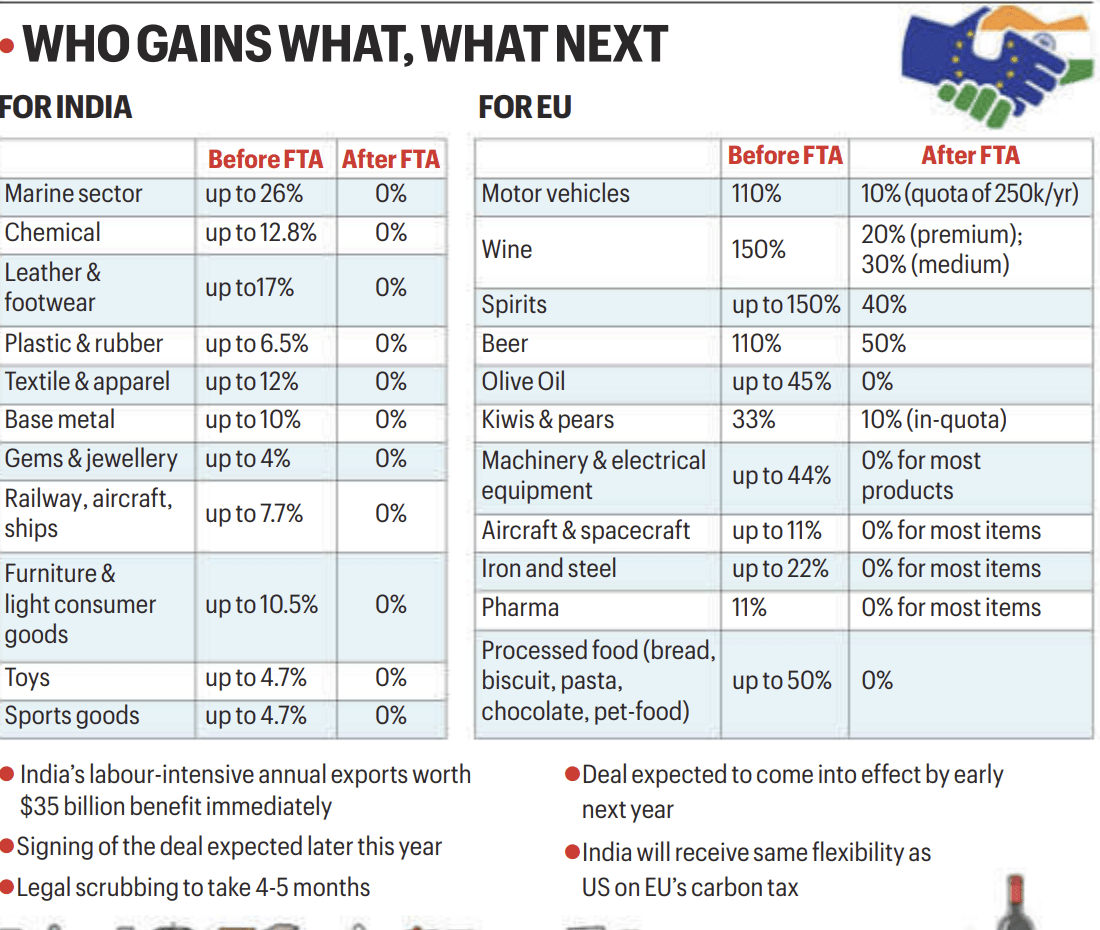
1. Strategic Significance
1.1 India and the EU concluded a landmark FTA after nearly two decades of negotiations.
1.2 Agreement is positioned as a strategic partnership, not merely a trade deal.
1.3 Comes amid global trade disruptions and protectionist trends.
2. Economic Dimension
2.1 India will eliminate duties on 99.5% of its exports to the EU.
2.2 EU will reduce tariffs on 97% of goods, including automobiles and wine (with quotas).
2.3 Labour-intensive Indian sectors such as textiles, footwear, gems & jewellery gain zero-duty access.
2.4 Estimated immediate benefit of $35 billion annually for Indian exports.
3. Trade-off Structure
3.1 India offered market access in automobiles and wines.
3.2 EU granted deeper access to labour-intensive manufacturing sectors of India.
3.3 Reflects India’s employment-centric trade strategy.
4. Security and Defence Partnership
4.1 Launch of an overarching India–EU Security and Defence Partnership.
4.2 Cooperation includes maritime security, cyber threats, hybrid warfare, space security and counter-terrorism.
4.3 Negotiations initiated on a Security of Information Agreement to enable classified exchanges.
5. Mobility Framework
5.1 New mobility pact facilitates movement of students, researchers, professionals and seasonal workers.
5.2 Establishment of the first EU legal gateway office in India.
5.3 Enhances people-to-people ties and talent circulation.
6. Technology and Innovation
6.1 India’s association with Horizon Europe announced.
6.2 Focus on human-centric and trustworthy AI, clean energy and frontier technologies.
6.3 Creation of EU–India innovation hubs and startup partnerships.
7. Geopolitical Context
7.1 Deal comes when global trade is increasingly weaponised.
7.2 EU and India project themselves as reliable democratic partners.
7.3 Aimed at building resilient supply chains amid geopolitical uncertainties.
8. Carbon and Sustainability Dimension
8.1 India to receive same flexibility as the US under the EU’s carbon tax framework.
8.2 Supports sustainable and inclusive growth narrative.
9. Implementation Timeline
9.1 Legal scrubbing expected to take 4–5 months.
9.2 Signing expected later this year.
9.3 Agreement likely to come into force by early next year.
![UPSC coaching in India - Best UPSC coaching institute - UPSC Mentor coaching - UPSC preparation institute - IAS coaching center - UPSC online coaching - Best IAS coaching in India - UPSC classes for beginners - Civil services preparation - IAS preparation institute - UPSC mentorship program - UPSC exam guidance - IAS study material - UPSC Prelims coaching - UPSC Mains coaching - UPSC interview preparation - Best IAS online classes - UPSC coaching with personal mentorship - Affordable UPSC coaching - UPSC test series - UPSC coaching near me - Best IAS coaching near me - UPSC institute in [your city] - IAS coaching center in [your city] - The UPSC Mentor coaching - The UPSC Mentor IAS classes - The UPSC Mentor UPSC course - UPSC Mentor online program.](https://theupscmentor.in/wp-content/uploads/2025/11/cropped-THE-UPSC-1.png)