![http://UPSC%20coaching%20in%20India%20-%20Best%20UPSC%20coaching%20institute%20-%20UPSC%20Mentor%20coaching%20-%20UPSC%20preparation%20institute%20-%20IAS%20coaching%20center%20-%20UPSC%20online%20coaching%20-%20Best%20IAS%20coaching%20in%20India%20-%20UPSC%20classes%20for%20beginners%20-%20Civil%20services%20preparation%20-%20IAS%20preparation%20institute%20-%20UPSC%20mentorship%20program%20-%20UPSC%20exam%20guidance%20-%20IAS%20study%20material%20-%20UPSC%20Prelims%20coaching%20-%20UPSC%20Mains%20coaching%20-%20UPSC%20interview%20preparation%20-%20Best%20IAS%20online%20classes%20-%20UPSC%20coaching%20with%20personal%20mentorship%20-%20Affordable%20UPSC%20coaching%20-%20UPSC%20test%20series%20-%20UPSC%20coaching%20near%20me%20-%20Best%20IAS%20coaching%20near%20me%20-%20UPSC%20institute%20in%20[your%20city]%20-%20IAS%20coaching%20center%20in%20[your%20city]%20-%20The%20UPSC%20Mentor%20coaching%20-%20The%20UPSC%20Mentor%20IAS%20classes%20-%20The%20UPSC%20Mentor%20UPSC%20course%20-%20UPSC%20Mentor%20online%20program.](https://theupscmentor.in/wp-content/uploads/2024/11/THE-UPSC-2-e1762319162137.png)
 admin
admin 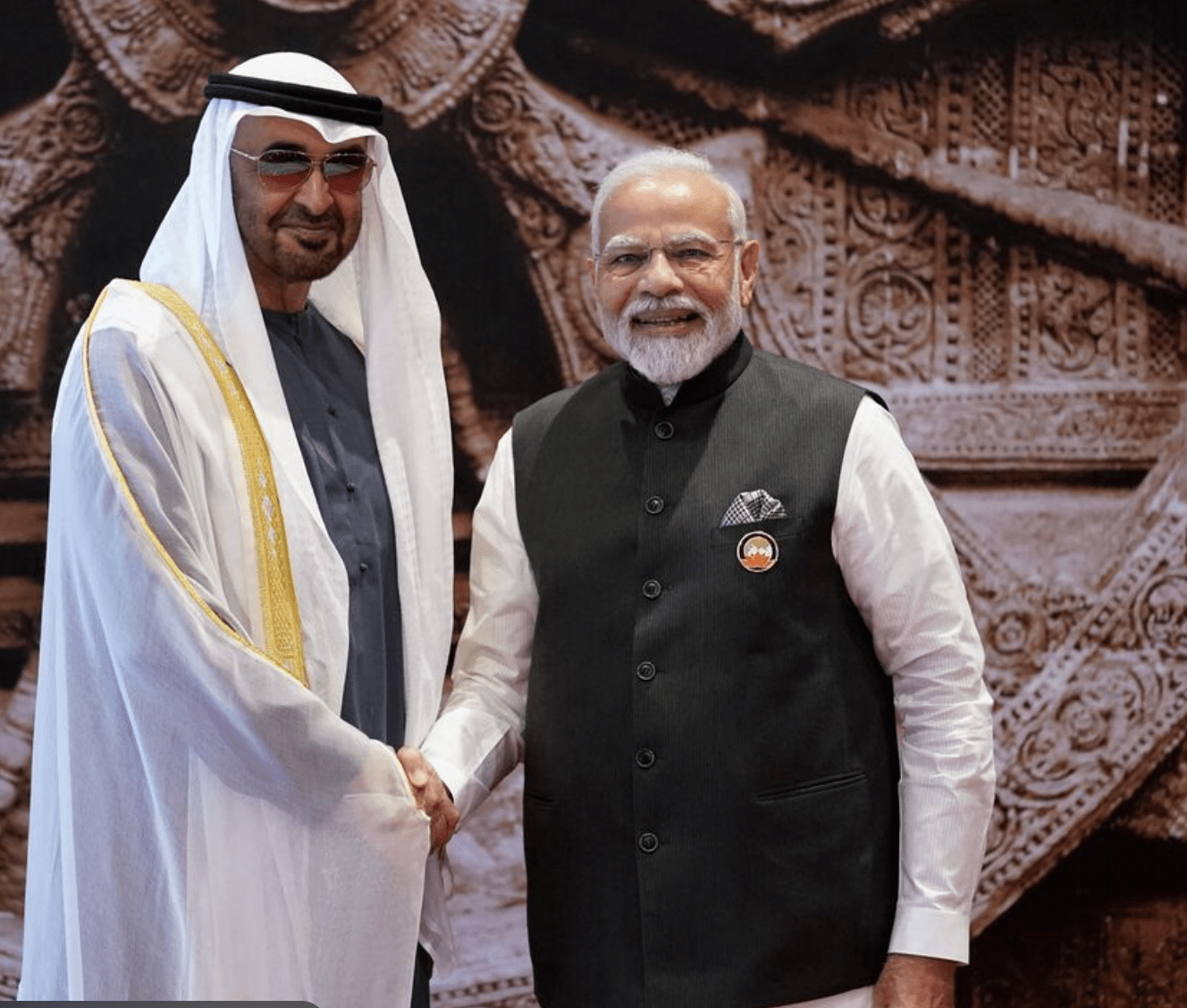
0.1 Context of the Visit
0.1.1 UAE President Sheikh Mohamed bin Zayed Al Nahyan (MbZ) paid a nearly two-hour visit to Delhi and met Prime Minister Narendra Modi.
0.1.2 The visit resulted in far-reaching outcomes, despite its short duration.
0.1.3 The UAE is India’s third-largest trading partner, second-largest export destination, and seventh-largest foreign investor.
0.1.4 India and the UAE concluded their first bilateral trade agreement in 2022.
0.2 Economic Outcomes of the Visit
0.2.1 A commitment was made to double bilateral trade to $200 billion.
0.2.2 Agreements included an LNG deal worth $3 billion.
0.2.3 The UAE announced investment in Gujarat.
0.2.4 Economic cooperation remained a key pillar of bilateral ties.
0.3 Strategic Defence Announcement
0.3.1 The most significant announcement was the intention to conclude a framework agreement for an India–UAE “Strategic Defence Partnership”.
0.3.2 This would be the first defence partnership of its kind for India with the UAE.
0.3.3 Details of the defence framework are yet to be revealed.
0.3.4 The announcement is being closely watched across West Asia and South Asia due to regional security sensitivities.
0.4 Regional Security Environment
0.4.1 MbZ’s visit took place amid heightened tensions between the UAE and Saudi Arabia.
0.4.2 The UAE and Saudi Arabia were once part of the same military coalition against the Houthi uprising in 2014.
0.4.3 Their rivalry has intensified over influence in Sudan.
0.4.4 The lack of communication between MbZ and Saudi Crown Prince Mohammed bin Salman (MbS) is being described as the Gulf’s new “cold war”.
0.5 Wider Regional Instability
0.5.1 Protests in Iran and U.S. threats of intervention have increased uncertainty.
0.5.2 The tenuous Gaza ceasefire adds to instability.
0.5.3 U.S. President Donald Trump’s plans for a “Board of Peace” have raised concerns about internal and external balance.
0.5.4 Israel’s bombing in Qatar in September 2025 further destabilised the region.
0.5.5 This prompted Saudi Arabia to rush a “mutual defence pact” with Pakistan.
0.5.6 Reports of including Türkiye in the pact signal a more complex and unstable regional order.
0.6 Interpretation of India–UAE Defence Talks
0.6.1 Some observers view the UAE–India defence negotiations as a possible military front to counter other regional alignments.
0.6.2 Foreign Secretary Vikram Misri sought to downplay such interpretations.
0.6.3 He clarified that the treaty was not about India’s involvement in a hypothetical future military scenario in the region.
0.7 India’s Broader Gulf Interests
0.7.1 India must maintain strong ties not only with the UAE but with all key Gulf countries.
0.7.2 Nearly 10 million Indians reside in the Gulf region.
0.7.3 The GCC region is a major energy source for India.
0.7.4 This is especially critical as U.S. and EU sanctions have curtailed other important energy sources for India.
0.8 Impact on India’s Connectivity Projects
0.8.1 India’s cross-regional connectivity plans depend on stability in the region.
0.8.2 These include Iran’s Chabahar port.
0.8.3 The International North–South Transport Corridor (INSTC) is also affected.
0.8.4 The India–Middle East–Europe Economic Corridor (IMEC) faces uncertainty.
0.8.5 All these projects are imperilled by regional tensions and depend on cooperation among multiple actors.
0.9 Central Takeaway
0.9.1 The Gulf region presents both strategic opportunities and serious faultlines for India.
0.9.2 India’s expanding defence engagement must be balanced against regional rivalries and instability.
0.9.3 Given competing alignments and overlapping crises, India has little option but to tread cautiously.
![UPSC coaching in India - Best UPSC coaching institute - UPSC Mentor coaching - UPSC preparation institute - IAS coaching center - UPSC online coaching - Best IAS coaching in India - UPSC classes for beginners - Civil services preparation - IAS preparation institute - UPSC mentorship program - UPSC exam guidance - IAS study material - UPSC Prelims coaching - UPSC Mains coaching - UPSC interview preparation - Best IAS online classes - UPSC coaching with personal mentorship - Affordable UPSC coaching - UPSC test series - UPSC coaching near me - Best IAS coaching near me - UPSC institute in [your city] - IAS coaching center in [your city] - The UPSC Mentor coaching - The UPSC Mentor IAS classes - The UPSC Mentor UPSC course - UPSC Mentor online program.](https://theupscmentor.in/wp-content/uploads/2025/11/cropped-THE-UPSC-1.png)