![http://UPSC%20coaching%20in%20India%20-%20Best%20UPSC%20coaching%20institute%20-%20UPSC%20Mentor%20coaching%20-%20UPSC%20preparation%20institute%20-%20IAS%20coaching%20center%20-%20UPSC%20online%20coaching%20-%20Best%20IAS%20coaching%20in%20India%20-%20UPSC%20classes%20for%20beginners%20-%20Civil%20services%20preparation%20-%20IAS%20preparation%20institute%20-%20UPSC%20mentorship%20program%20-%20UPSC%20exam%20guidance%20-%20IAS%20study%20material%20-%20UPSC%20Prelims%20coaching%20-%20UPSC%20Mains%20coaching%20-%20UPSC%20interview%20preparation%20-%20Best%20IAS%20online%20classes%20-%20UPSC%20coaching%20with%20personal%20mentorship%20-%20Affordable%20UPSC%20coaching%20-%20UPSC%20test%20series%20-%20UPSC%20coaching%20near%20me%20-%20Best%20IAS%20coaching%20near%20me%20-%20UPSC%20institute%20in%20[your%20city]%20-%20IAS%20coaching%20center%20in%20[your%20city]%20-%20The%20UPSC%20Mentor%20coaching%20-%20The%20UPSC%20Mentor%20IAS%20classes%20-%20The%20UPSC%20Mentor%20UPSC%20course%20-%20UPSC%20Mentor%20online%20program.](https://theupscmentor.in/wp-content/uploads/2024/11/THE-UPSC-2-e1762319162137.png)
 admin
admin 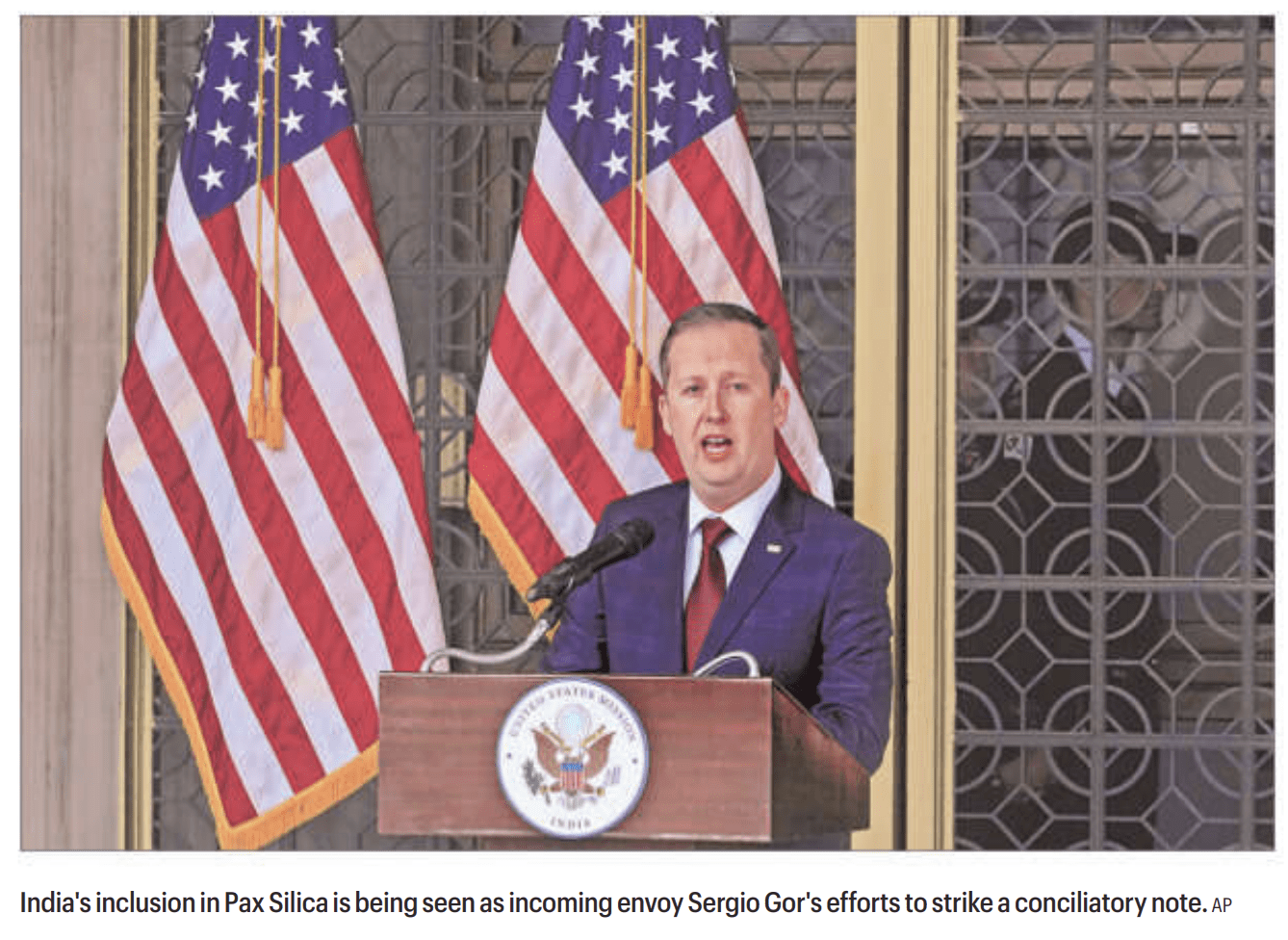
0.1 Context of India’s Late Entry
0.1.1 India was inducted into Pax Silica belatedly, similar to its late inclusion in the Minerals Security Partnership (MSP).
0.1.2 The delayed entry reflects a recurring pattern where India is brought in after the initiative’s initial launch.
0.2 Strategic Signal from the US
0.2.1 India’s inclusion is being interpreted as a conciliatory diplomatic signal by incoming US Ambassador Sergio Gor.
0.2.2 It also indicates US efforts to repair strained bilateral ties, especially after trade frictions and defence disagreements.
0.3 What is Pax Silica?
0.3.1 Pax Silica is a US-led strategic initiative to counter China’s dominance in new-age technologies.
0.3.2 It aims to reduce what the US calls “coercive dependencies” in global supply chains.
0.3.3 Focus areas include AI, semiconductors, minerals, chips, security and logistics.
0.4 Why India Was Not in the Initial List
0.4.1 India is seen as lacking critical edge technologies or access to resources targeted by Pax Silica.
0.4.2 India is not a major repository of critical minerals and lacks advanced processing capacity.
0.4.3 This absence, rather than political mistrust, explains India’s exclusion at the outset.
0.5 What Other Members Brought to the Table
0.5.1 Japan and South Korea offer advanced technology and manufacturing expertise.
0.5.2 Netherlands contributes specialised lithography machinery that is difficult to substitute.
0.5.3 Australia is a key critical minerals repository.
0.5.4 Singapore functions as a global transhipment hub.
0.5.5 Israel, the UK and UAE are innovation and infrastructure centres with AI and tech ecosystems.
0.6 India’s Strategic Dilemma
0.6.1 India seeks to position itself as a global supply-chain alternative to China.
0.6.2 However, without technological depth or mineral leverage, India risks being seen as a secondary partner.
0.7 Core Message for India
0.7.1 US-led strategic groupings are transactional, not symbolic.
0.7.2 India must bring tangible capabilities, not just strategic alignment.
0.7.3 Future credibility depends on processing capacity, tech depth and infrastructure readiness.
![UPSC coaching in India - Best UPSC coaching institute - UPSC Mentor coaching - UPSC preparation institute - IAS coaching center - UPSC online coaching - Best IAS coaching in India - UPSC classes for beginners - Civil services preparation - IAS preparation institute - UPSC mentorship program - UPSC exam guidance - IAS study material - UPSC Prelims coaching - UPSC Mains coaching - UPSC interview preparation - Best IAS online classes - UPSC coaching with personal mentorship - Affordable UPSC coaching - UPSC test series - UPSC coaching near me - Best IAS coaching near me - UPSC institute in [your city] - IAS coaching center in [your city] - The UPSC Mentor coaching - The UPSC Mentor IAS classes - The UPSC Mentor UPSC course - UPSC Mentor online program.](https://theupscmentor.in/wp-content/uploads/2025/11/cropped-THE-UPSC-1.png)