![http://UPSC%20coaching%20in%20India%20-%20Best%20UPSC%20coaching%20institute%20-%20UPSC%20Mentor%20coaching%20-%20UPSC%20preparation%20institute%20-%20IAS%20coaching%20center%20-%20UPSC%20online%20coaching%20-%20Best%20IAS%20coaching%20in%20India%20-%20UPSC%20classes%20for%20beginners%20-%20Civil%20services%20preparation%20-%20IAS%20preparation%20institute%20-%20UPSC%20mentorship%20program%20-%20UPSC%20exam%20guidance%20-%20IAS%20study%20material%20-%20UPSC%20Prelims%20coaching%20-%20UPSC%20Mains%20coaching%20-%20UPSC%20interview%20preparation%20-%20Best%20IAS%20online%20classes%20-%20UPSC%20coaching%20with%20personal%20mentorship%20-%20Affordable%20UPSC%20coaching%20-%20UPSC%20test%20series%20-%20UPSC%20coaching%20near%20me%20-%20Best%20IAS%20coaching%20near%20me%20-%20UPSC%20institute%20in%20[your%20city]%20-%20IAS%20coaching%20center%20in%20[your%20city]%20-%20The%20UPSC%20Mentor%20coaching%20-%20The%20UPSC%20Mentor%20IAS%20classes%20-%20The%20UPSC%20Mentor%20UPSC%20course%20-%20UPSC%20Mentor%20online%20program.](https://theupscmentor.in/wp-content/uploads/2024/11/THE-UPSC-2-e1762319162137.png)
 admin
admin 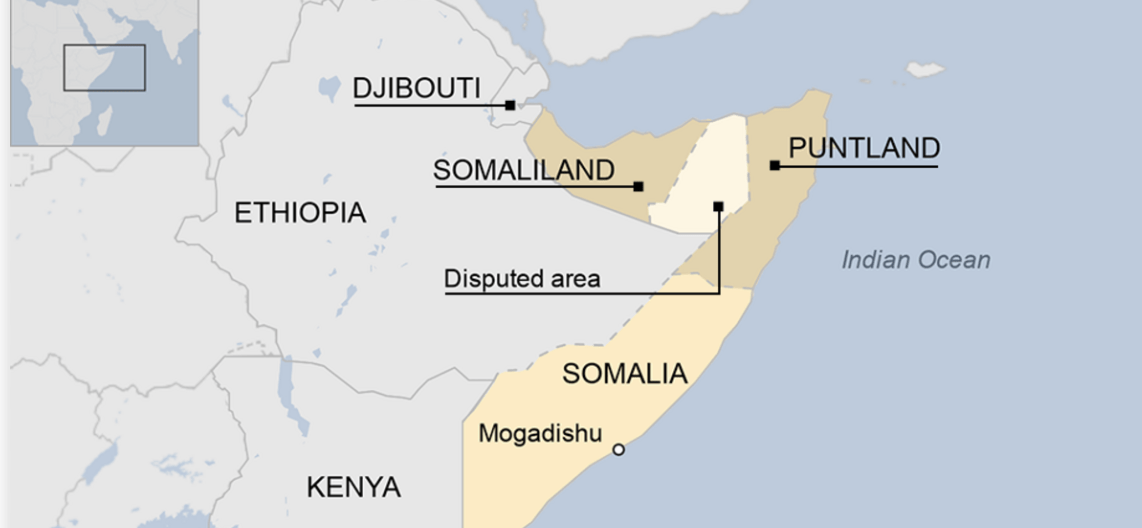
0.1 Why Somaliland is suddenly geopolitically important
0.1.1 **Israel’s decision in December 2025 to recognise Somaliland as a sovereign state marks a major diplomatic rupture in the Horn of Africa.
0.1.2 The move goes beyond symbolism and risks intensifying proxy conflicts, economic coercion, and militarisation in the Red Sea region.
0.1.3 Somaliland has moved from being a diplomatic footnote to a frontline issue in great-power competition.
0.2 Why China faces the sharpest strategic dilemma
0.2.1 While much focus has been on Israel and regional actors, the most acute strategic dilemma belongs to China.
0.2.2 For China, Somaliland sits at the intersection of three core interests:
0.2.3 safeguarding the “One China” principle, securing the Red Sea–Gulf of Aden corridor, and managing great-power rivalry in Africa.
0.3 China’s predictable but constrained response
0.3.1 Beijing has condemned Israel’s move as an endorsement of separatism, reiterating that Somaliland is an “inseparable part” of Somalia.
0.3.2 This language mirrors China’s position on Taiwan, shaped by domestic sovereignty concerns.
0.3.3 However, China finds it harder to dismiss Somaliland than many other disputed territories due to its stability and governance record.
0.4 Somaliland’s exceptional status complicating China’s stance
0.4.1 Unlike many separatist regions, Somaliland has maintained relative peace, functioning institutions, and competitive elections for over three decades.
0.4.2 Its stability contrasts sharply with Somalia’s chronic insecurity.
0.4.3 This exposes the limits of China’s rigid sovereignty doctrine, which prioritises territorial integrity over internal legitimacy.
0.5 The Taiwan factor deepening China’s anxiety
0.5.1 China’s dilemma intensified after Somaliland established official ties with Taiwan in 2020.
0.5.2 Taiwan’s representative office in Hargeisa, along with expanding technical, medical, and economic cooperation, directly challenges Beijing’s One China policy.
0.5.3 Israel’s recognition further elevates Somaliland’s international profile, indirectly boosting Taiwan’s diplomatic visibility.
0.6 Why the Red Sea–Bab el-Mandeb corridor matters to China
0.6.1 China’s concerns are not ideological alone; they are deeply geoeconomic and geostrategic.
0.6.2 The Bab el-Mandeb Strait, linking the Red Sea to the Gulf of Aden, is a critical choke point for Chinese trade and energy flows under the Maritime Silk Road.
0.6.3 China established its first overseas military base in Djibouti in 2017 to protect these interests and ensure sustained security presence.
0.7 Strategic risks from Somaliland’s growing legitimacy
0.7.1 If Somaliland gains wider recognition, it could emerge as an alternative security and logistics hub along the Gulf of Aden.
0.7.2 Backing from Israel, the UAE, and potentially the United States could enable a rival intelligence and security ecosystem near Djibouti.
0.7.3 This would dilute China’s regional leverage, where it has invested heavily in ports, bases, and political relationships.
0.8 China’s possible counter-strategies and their limits
0.8.1 China is compelled to oppose Somaliland’s recognition and restrict diplomatic space for Taiwan.
0.8.2 Yet excessive pressure risks pushing Hargeisa closer to China’s rivals, including Taiwan, Israel, and Western powers.
0.8.3 Beijing may resort to hybrid tactics — economic coercion, elite lobbying, and information campaigns (including Chinese media networks operating across Africa).
0.8.4 However, such actions could damage China’s cultivated image as a non-interfering partner.
0.9 Wider geopolitical forces reshaping the equation
0.9.1 China’s strong pro-Palestinian stance and criticism of Israel’s actions in Gaza reinforce its opposition to Israel’s Somaliland move.
0.9.2 While this posture plays well in the Arab world and Global South, it risks drawing China deeper into Middle Eastern political contests.
0.9.3 Ethiopia’s 2024 MoU to recognise Somaliland in exchange for port access, growing US congressional interest, and tacit UAE support indicate a broader geopolitical recalibration.
0.9.4 Each additional recognition weakens China’s ability to diplomatically isolate Somaliland and raises the cost of maintaining the status quo.
![UPSC coaching in India - Best UPSC coaching institute - UPSC Mentor coaching - UPSC preparation institute - IAS coaching center - UPSC online coaching - Best IAS coaching in India - UPSC classes for beginners - Civil services preparation - IAS preparation institute - UPSC mentorship program - UPSC exam guidance - IAS study material - UPSC Prelims coaching - UPSC Mains coaching - UPSC interview preparation - Best IAS online classes - UPSC coaching with personal mentorship - Affordable UPSC coaching - UPSC test series - UPSC coaching near me - Best IAS coaching near me - UPSC institute in [your city] - IAS coaching center in [your city] - The UPSC Mentor coaching - The UPSC Mentor IAS classes - The UPSC Mentor UPSC course - UPSC Mentor online program.](https://theupscmentor.in/wp-content/uploads/2025/11/cropped-THE-UPSC-1.png)