![http://UPSC%20coaching%20in%20India%20-%20Best%20UPSC%20coaching%20institute%20-%20UPSC%20Mentor%20coaching%20-%20UPSC%20preparation%20institute%20-%20IAS%20coaching%20center%20-%20UPSC%20online%20coaching%20-%20Best%20IAS%20coaching%20in%20India%20-%20UPSC%20classes%20for%20beginners%20-%20Civil%20services%20preparation%20-%20IAS%20preparation%20institute%20-%20UPSC%20mentorship%20program%20-%20UPSC%20exam%20guidance%20-%20IAS%20study%20material%20-%20UPSC%20Prelims%20coaching%20-%20UPSC%20Mains%20coaching%20-%20UPSC%20interview%20preparation%20-%20Best%20IAS%20online%20classes%20-%20UPSC%20coaching%20with%20personal%20mentorship%20-%20Affordable%20UPSC%20coaching%20-%20UPSC%20test%20series%20-%20UPSC%20coaching%20near%20me%20-%20Best%20IAS%20coaching%20near%20me%20-%20UPSC%20institute%20in%20[your%20city]%20-%20IAS%20coaching%20center%20in%20[your%20city]%20-%20The%20UPSC%20Mentor%20coaching%20-%20The%20UPSC%20Mentor%20IAS%20classes%20-%20The%20UPSC%20Mentor%20UPSC%20course%20-%20UPSC%20Mentor%20online%20program.](https://theupscmentor.in/wp-content/uploads/2024/11/THE-UPSC-2-e1762319162137.png)
 admin
admin 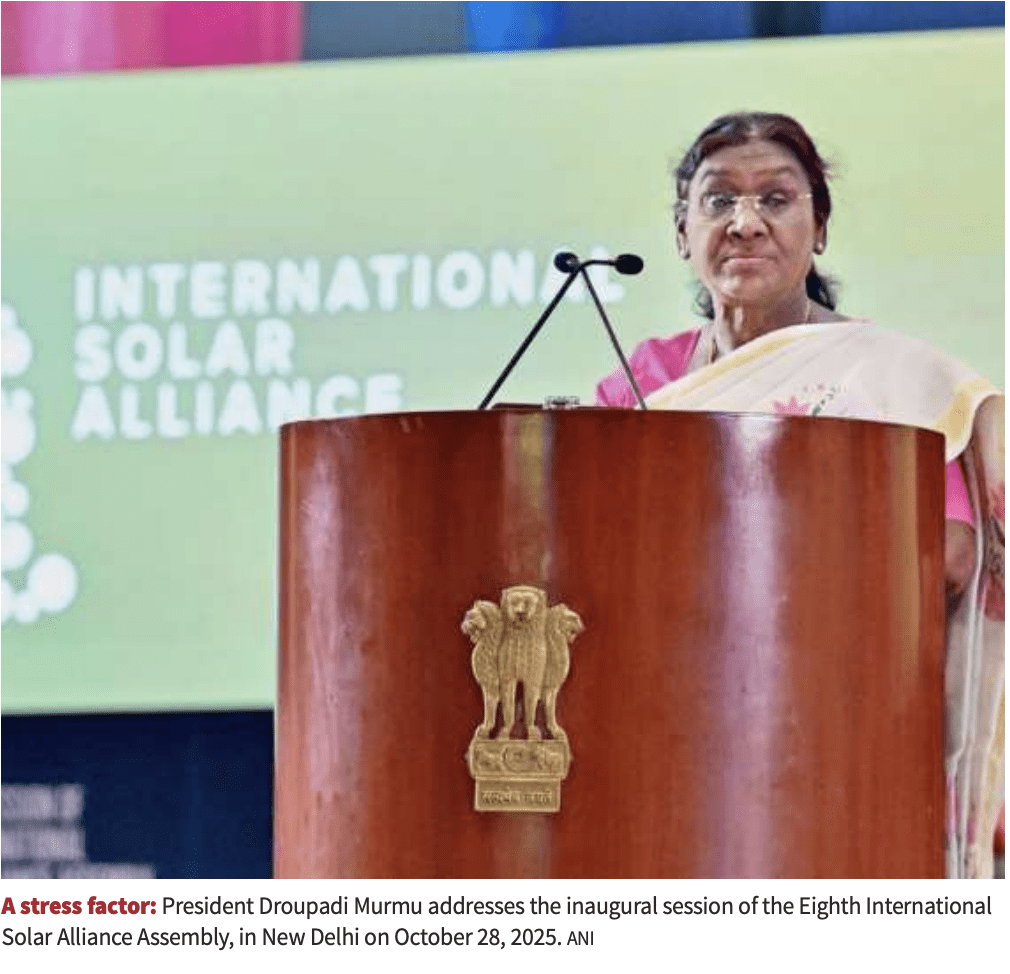
1. Context
1.1 In January 2026, the U.S. government announced withdrawal from 66 international organisations, citing lack of alignment with American interests.
1.2 The International Solar Alliance (ISA), headquartered in India and jointly led by India and France, was among these platforms.
2. About the International Solar Alliance (ISA)
2.1 The ISA was established in 2015 to make solar power cheaper and easier to adopt, especially for developing countries.
2.2 The ISA does not build solar plants directly but focuses on access to finance, risk reduction for investors, and accelerating solar adoption.
2.3 The Alliance has over 120 member countries, spanning Africa, Asia, and island nations.
2.4 The U.S. joined ISA in 2021 and contributed around $2.1 million over three years.
3. Financial Impact of U.S. Exit
3.1 The U.S. contribution forms only about 1% of ISA’s total funds.
3.2 Indian officials have stated that day-to-day operations and ongoing programmes will continue.
3.3 Training and capacity-building initiatives under ISA remain unaffected.
4. Confidence and Signalling Effects
4.1 The economic impact is not limited to budgets but extends to investor confidence.
4.2 The ripple effects of the U.S. exit are expected to emerge primarily through perception and signalling, rather than direct funding gaps.
5. Impact on India’s Solar Industry
5.1 India’s solar sector does not depend on the U.S. for solar panels or key equipment.
5.2 India now manufactures a large share of solar components domestically.
5.3 As of 2025, India’s solar module manufacturing capacity reached nearly 144 GW, while solar cell manufacturing stood at around 25 GW.
6. Global Supply Chain Dynamics
6.1 China remains the largest producer of high-efficiency solar modules and cells, accounting for around 70% of global capacity.
6.2 India imported approximately $1.7 billion worth of photovoltaic modules from China in FY25, as per MNRE data.
6.3 Despite this, the U.S. exit does not raise project costs or electricity tariffs in India.
7. Domestic Demand and Investment Stability
7.1 Most solar projects in India are driven by domestic demand, not external funding.
7.2 Projects are backed by long-term contracts with state utilities and central agencies.
7.3 Investors assess policy stability, power demand, and growth potential, rather than U.S. participation in ISA.
8. Employment and Economic Effects
8.1 Solar jobs in India are concentrated in manufacturing, installation, and operations.
8.2 These jobs are not directly affected by U.S. climate policy decisions.
8.3 India’s expanding domestic manufacturing base provides employment resilience.
9. External Risks: Africa and Developing Countries
9.1 The real economic risk lies outside India, particularly in Africa and poorer developing nations.
9.2 ISA-backed projects in these regions depend heavily on cheap loans and international cooperation.
9.3 If major economies like the U.S. step back from climate engagement, lenders may turn cautious, slowing project approvals.
10. Strategic Role of ISA for India
10.1 The ISA is a key instrument of India’s climate leadership and diplomacy in the Global South.
10.2 It helps India build influence, open markets, and support overseas expansion of Indian companies.
10.3 While the U.S. exit removes an influential partner, it does not alter India’s leadership role within ISA.
![UPSC coaching in India - Best UPSC coaching institute - UPSC Mentor coaching - UPSC preparation institute - IAS coaching center - UPSC online coaching - Best IAS coaching in India - UPSC classes for beginners - Civil services preparation - IAS preparation institute - UPSC mentorship program - UPSC exam guidance - IAS study material - UPSC Prelims coaching - UPSC Mains coaching - UPSC interview preparation - Best IAS online classes - UPSC coaching with personal mentorship - Affordable UPSC coaching - UPSC test series - UPSC coaching near me - Best IAS coaching near me - UPSC institute in [your city] - IAS coaching center in [your city] - The UPSC Mentor coaching - The UPSC Mentor IAS classes - The UPSC Mentor UPSC course - UPSC Mentor online program.](https://theupscmentor.in/wp-content/uploads/2025/11/cropped-THE-UPSC-1.png)