![http://UPSC%20coaching%20in%20India%20-%20Best%20UPSC%20coaching%20institute%20-%20UPSC%20Mentor%20coaching%20-%20UPSC%20preparation%20institute%20-%20IAS%20coaching%20center%20-%20UPSC%20online%20coaching%20-%20Best%20IAS%20coaching%20in%20India%20-%20UPSC%20classes%20for%20beginners%20-%20Civil%20services%20preparation%20-%20IAS%20preparation%20institute%20-%20UPSC%20mentorship%20program%20-%20UPSC%20exam%20guidance%20-%20IAS%20study%20material%20-%20UPSC%20Prelims%20coaching%20-%20UPSC%20Mains%20coaching%20-%20UPSC%20interview%20preparation%20-%20Best%20IAS%20online%20classes%20-%20UPSC%20coaching%20with%20personal%20mentorship%20-%20Affordable%20UPSC%20coaching%20-%20UPSC%20test%20series%20-%20UPSC%20coaching%20near%20me%20-%20Best%20IAS%20coaching%20near%20me%20-%20UPSC%20institute%20in%20[your%20city]%20-%20IAS%20coaching%20center%20in%20[your%20city]%20-%20The%20UPSC%20Mentor%20coaching%20-%20The%20UPSC%20Mentor%20IAS%20classes%20-%20The%20UPSC%20Mentor%20UPSC%20course%20-%20UPSC%20Mentor%20online%20program.](https://theupscmentor.in/wp-content/uploads/2024/11/THE-UPSC-2-e1762319162137.png)
 admin
admin 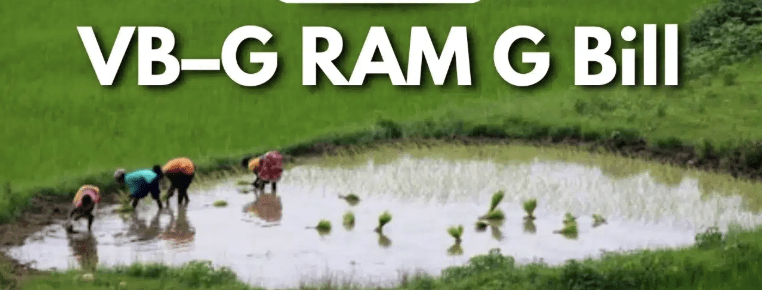
1. Context
1.1 The Viksit Bharat – Guarantee for Rozgar and Ajeevika Mission (Gramin) Act (VB-G RAM G Act) has been proposed as a replacement for MGNREGA.
1.2 The government claims the new Act strengthens employment guarantees and improves efficiency.
1.3 The article argues that these claims are misleading and weaken workers’ rights.
2. Employment guarantee: what is being claimed
2.1 The government claims VB-G RAM G guarantees 125 days of work per household, compared to 100 days under MGNREGA.
2.2 On paper, this appears to expand workers’ entitlements.
2.3 However, the legal design of the guarantee makes this expansion unreliable.
3. The “switch-off clause” explained clearly
3.1 VB-G RAM G makes employment guarantee applicable only in areas notified by the Central government.
3.2 This means workers cannot demand work as a right unless the Centre activates the scheme in their area.
3.3 A guarantee that depends on prior government approval is not a true legal guarantee.
4. Why the 125-day promise adds nothing new
4.1 Under MGNREGA, States are already allowed to provide more than 100 days of work.
4.2 Several States are already providing 125 days without changing the law.
4.3 Therefore, increasing days does not require replacing MGNREGA.
5. “Disentitlement” and unemployment allowance clarified
5.1 Supporters argue VB-G RAM G removes disentitlement provisions from MGNREGA.
5.2 Disentitlement refers to temporary loss of unemployment allowance if a worker refuses a work offer.
5.3 In practice, this provision has almost never been used and has not caused real harm.
6. Why disentitlement is a non-issue
6.1 The clause was introduced to prevent frivolous applications, not to deny genuine workers.
6.2 Over two decades, frivolous applications have not emerged as a serious problem.
6.3 Removing this clause therefore addresses a problem that does not exist.
7. Shift from demand-driven to normative funding
7.1 MGNREGA is demand-driven, meaning funds must be provided whenever people demand work.
7.2 VB-G RAM G moves towards normative funding, where spending is capped by Central allocations.
7.3 This changes employment from a legal entitlement into a budget-limited scheme.
8. Why budget caps weaken employment guarantee
8.1 When funding is capped, workers may be denied work even if they are legally eligible.
8.2 Employment becomes dependent on available funds, not actual demand.
8.3 This undermines the core principle of employment guarantee.
9. The equity argument examined
9.1 Supporters claim normative funding ensures fairer distribution across States.
9.2 However, data show no consistent link between MGNREGA spending and State prosperity.
9.3 Both poorer and better-off States show varying levels of employment demand.
10. Impact on poorer States
10.1 Poorer States naturally have higher demand for employment.
10.2 Budget caps prevent them from meeting this demand adequately.
10.3 Raising wage rates, not limiting funds, is the appropriate corrective.
11. Corruption and technology claims assessed
11.1 VB-G RAM G claims improved transparency through digital technology.
11.2 Similar digital systems already exist under MGNREGA.
11.3 These systems have shown mixed results, often harming workers through payment delays and errors.
12. Core conclusion
12.1 VB-G RAM G does not meaningfully improve employment guarantees.
12.2 It weakens employment as a legal right by introducing budget and notification controls.
12.3 Strengthening MGNREGA implementation is preferable to replacing it.
![UPSC coaching in India - Best UPSC coaching institute - UPSC Mentor coaching - UPSC preparation institute - IAS coaching center - UPSC online coaching - Best IAS coaching in India - UPSC classes for beginners - Civil services preparation - IAS preparation institute - UPSC mentorship program - UPSC exam guidance - IAS study material - UPSC Prelims coaching - UPSC Mains coaching - UPSC interview preparation - Best IAS online classes - UPSC coaching with personal mentorship - Affordable UPSC coaching - UPSC test series - UPSC coaching near me - Best IAS coaching near me - UPSC institute in [your city] - IAS coaching center in [your city] - The UPSC Mentor coaching - The UPSC Mentor IAS classes - The UPSC Mentor UPSC course - UPSC Mentor online program.](https://theupscmentor.in/wp-content/uploads/2025/11/cropped-THE-UPSC-1.png)