![http://UPSC%20coaching%20in%20India%20-%20Best%20UPSC%20coaching%20institute%20-%20UPSC%20Mentor%20coaching%20-%20UPSC%20preparation%20institute%20-%20IAS%20coaching%20center%20-%20UPSC%20online%20coaching%20-%20Best%20IAS%20coaching%20in%20India%20-%20UPSC%20classes%20for%20beginners%20-%20Civil%20services%20preparation%20-%20IAS%20preparation%20institute%20-%20UPSC%20mentorship%20program%20-%20UPSC%20exam%20guidance%20-%20IAS%20study%20material%20-%20UPSC%20Prelims%20coaching%20-%20UPSC%20Mains%20coaching%20-%20UPSC%20interview%20preparation%20-%20Best%20IAS%20online%20classes%20-%20UPSC%20coaching%20with%20personal%20mentorship%20-%20Affordable%20UPSC%20coaching%20-%20UPSC%20test%20series%20-%20UPSC%20coaching%20near%20me%20-%20Best%20IAS%20coaching%20near%20me%20-%20UPSC%20institute%20in%20[your%20city]%20-%20IAS%20coaching%20center%20in%20[your%20city]%20-%20The%20UPSC%20Mentor%20coaching%20-%20The%20UPSC%20Mentor%20IAS%20classes%20-%20The%20UPSC%20Mentor%20UPSC%20course%20-%20UPSC%20Mentor%20online%20program.](https://theupscmentor.in/wp-content/uploads/2024/11/THE-UPSC-2-e1762319162137.png)
 admin
admin 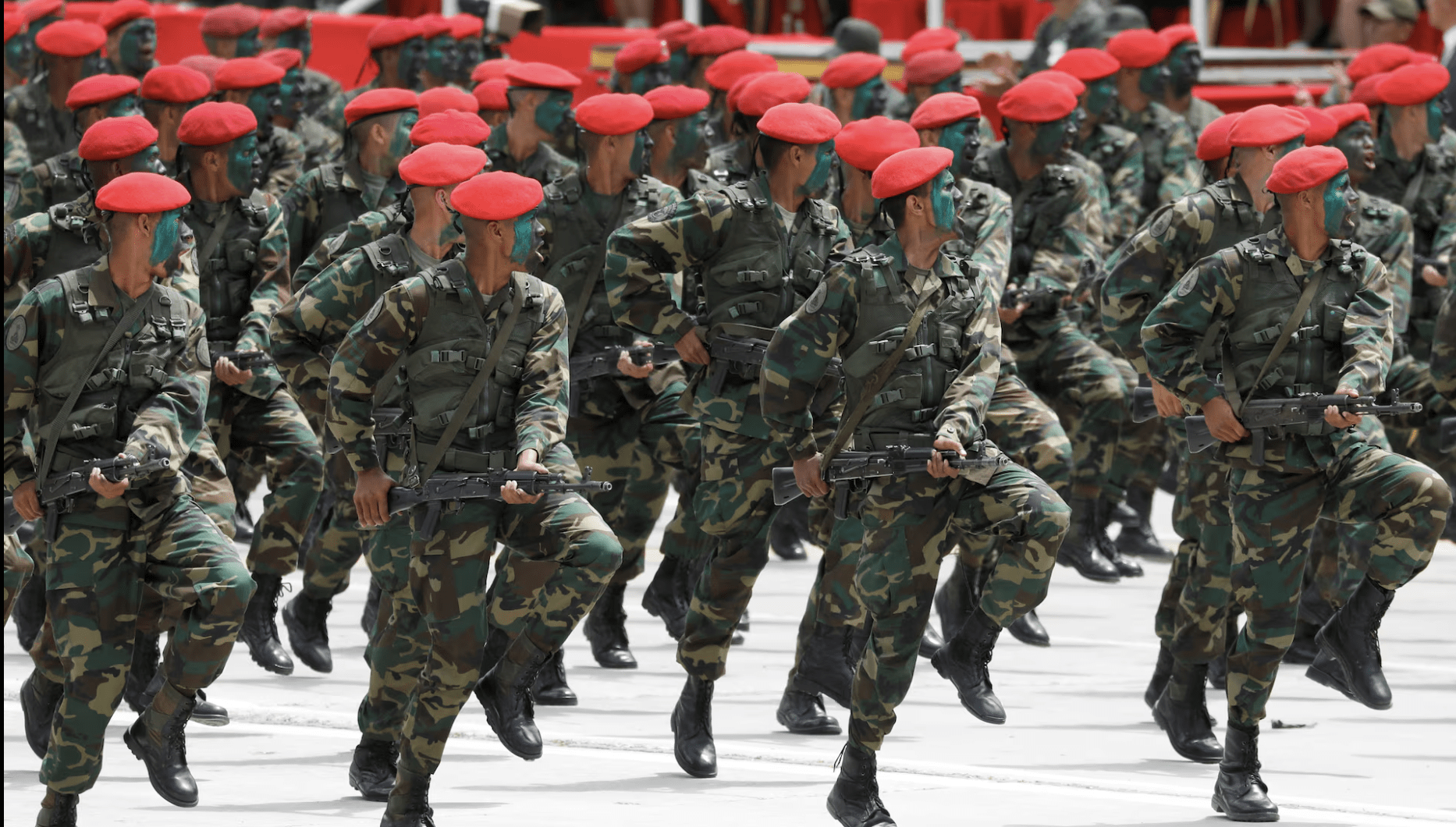
1. Why Maduro’s capture surprised observers
1.1 Most analysts expected the United States to rely on diplomatic and military pressure, not a direct capture of President Nicolas Maduro.
1.2 The deployment of a large US naval armada in the Caribbean was widely seen as a coercive signal meant to force negotiations.
1.3 Maduro himself had claimed that he had spoken to President Trump and was open to dialogue, reinforcing the belief that talks were ongoing.
1.4 Against this backdrop, the sudden special forces operation inside Caracas came as a major shock.
2. What the operation indicates about Venezuela’s internal security
2.1 Caracas is not a coastal city, which means US forces penetrated deep inland without facing visible resistance.
2.2 Given the regional military build-up, the Venezuelan armed forces should have been on high alert.
2.3 Although Chinese equipment was reportedly present, it did not prevent the operation.
2.4 This points to serious intelligence failures or internal confusion rather than a deliberate military confrontation.
3. Who is actually running Venezuela now?
3.1 After Maduro’s removal, there is no clarity about the real centre of power in Venezuela.
3.2 President Trump publicly stated that the US would “run Venezuela”, but this position was later softened by other US officials.
3.3 As of now, no clearly legitimate civilian authority has replaced Maduro, adding to uncertainty.
4. What happened to the elected opposition?
4.1 In the 2024 presidential election, opposition candidate Edmundo Gonzalez was widely believed to have won.
4.2 Despite this, he was not installed as president, raising questions about democratic outcomes.
4.3 Another prominent opposition leader, Maria Corina Machado, was dismissed by Trump as lacking loyalty.
4.4 This suggests that the US prioritised political reliability over popular mandate.
5. Why Delcy Rodriguez has emerged as a key figure
5.1 Delcy Rodriguez has emerged as the most prominent interim authority.
5.2 She has extensive administrative experience, having served as foreign minister, finance minister, oil minister and vice president.
5.3 Importantly, she is a long-time trusted aide of Maduro, not a break from the old regime.
5.4 Her brother, Jorge Rodriguez, remains influential within the ruling party.
6. Continuity of the Chavista power structure
6.1 Diosdado Cabello, the interior minister, continues to wield power despite being indicted in a US court.
6.2 Vladimir Padrino Lopez, the defence minister, also remains in office.
6.3 This shows that Maduro loyalists are still firmly embedded within the state machinery.
7. Why the Venezuelan military is the decisive actor
7.1 Historically, the Venezuelan military has been the backbone of Maduro’s rule.
7.2 The key question now is whether the military will continue backing Chavista leaders or shift its support.
7.3 The expert therefore stresses that Venezuela’s future depends on which way the military goes.
8. Implications for regional security
8.1 The situation in Venezuela remains fluid and unpredictable, with no clear roadmap ahead.
8.2 Allegations linking the regime to narco-terrorism need to be tested through legal processes.
8.3 Venezuela is not a major fentanyl route into the United States, making some claims exaggerated.
9. Could this embolden Russia and China?
9.1 Any unilateral action taken outside the rules-based international order creates uncomfortable precedents.
9.2 Such actions risk weakening multilateral institutions and may open a Pandora’s box globally.
10. How Venezuela’s oil economy collapsed
10.1 For decades, American oil companies played a central role in Venezuela’s oil sector.
10.2 In 2007, Hugo Chavez nationalised PDVSA, prompting capital and technology withdrawal.
10.3 The government lacked technical expertise, investment and skilled manpower to sustain production.
10.4 The decline began under Chavez and worsened significantly under Maduro.
11. India, China and Venezuelan oil
11.1 During Chavez’s tenure, India and China were major buyers of Venezuelan crude.
11.2 Over time, India reduced imports, while China continued large-scale purchases.
11.3 ONGC Videsh acquired the San Cristobal field, while Carabobo blocks were later allotted.
11.4 Current political instability makes future returns uncertain.
12. India’s diplomatic response
12.1 India adopted a measured and cautious approach to Maduro’s capture.
12.2 It avoided condemnation due to the importance of India–US relations.
12.3 This reflects India’s broader strategy of multi-alignment and strategic hedging.
13. India–Venezuela relations: Chavez and Maduro
13.1 Under Chavez: Relations were warm, marked by Global South solidarity and expanding trade.
13.2 Under Maduro: Ties weakened due to economic collapse and Western isolation of Venezuela.
13.3 However, diplomatic engagement never completely ended.
Conclusion
C.1 Maduro’s capture has not dismantled Venezuela’s power structure.
C.2 Authority remains divided among Maduro loyalists, interim leaders and the military.
C.3 Ultimately, Venezuela’s direction depends on the political choice of its military.
![UPSC coaching in India - Best UPSC coaching institute - UPSC Mentor coaching - UPSC preparation institute - IAS coaching center - UPSC online coaching - Best IAS coaching in India - UPSC classes for beginners - Civil services preparation - IAS preparation institute - UPSC mentorship program - UPSC exam guidance - IAS study material - UPSC Prelims coaching - UPSC Mains coaching - UPSC interview preparation - Best IAS online classes - UPSC coaching with personal mentorship - Affordable UPSC coaching - UPSC test series - UPSC coaching near me - Best IAS coaching near me - UPSC institute in [your city] - IAS coaching center in [your city] - The UPSC Mentor coaching - The UPSC Mentor IAS classes - The UPSC Mentor UPSC course - UPSC Mentor online program.](https://theupscmentor.in/wp-content/uploads/2025/11/cropped-THE-UPSC-1.png)