![http://UPSC%20coaching%20in%20India%20-%20Best%20UPSC%20coaching%20institute%20-%20UPSC%20Mentor%20coaching%20-%20UPSC%20preparation%20institute%20-%20IAS%20coaching%20center%20-%20UPSC%20online%20coaching%20-%20Best%20IAS%20coaching%20in%20India%20-%20UPSC%20classes%20for%20beginners%20-%20Civil%20services%20preparation%20-%20IAS%20preparation%20institute%20-%20UPSC%20mentorship%20program%20-%20UPSC%20exam%20guidance%20-%20IAS%20study%20material%20-%20UPSC%20Prelims%20coaching%20-%20UPSC%20Mains%20coaching%20-%20UPSC%20interview%20preparation%20-%20Best%20IAS%20online%20classes%20-%20UPSC%20coaching%20with%20personal%20mentorship%20-%20Affordable%20UPSC%20coaching%20-%20UPSC%20test%20series%20-%20UPSC%20coaching%20near%20me%20-%20Best%20IAS%20coaching%20near%20me%20-%20UPSC%20institute%20in%20[your%20city]%20-%20IAS%20coaching%20center%20in%20[your%20city]%20-%20The%20UPSC%20Mentor%20coaching%20-%20The%20UPSC%20Mentor%20IAS%20classes%20-%20The%20UPSC%20Mentor%20UPSC%20course%20-%20UPSC%20Mentor%20online%20program.](https://theupscmentor.in/wp-content/uploads/2024/11/THE-UPSC-2-e1762319162137.png)
 admin
admin 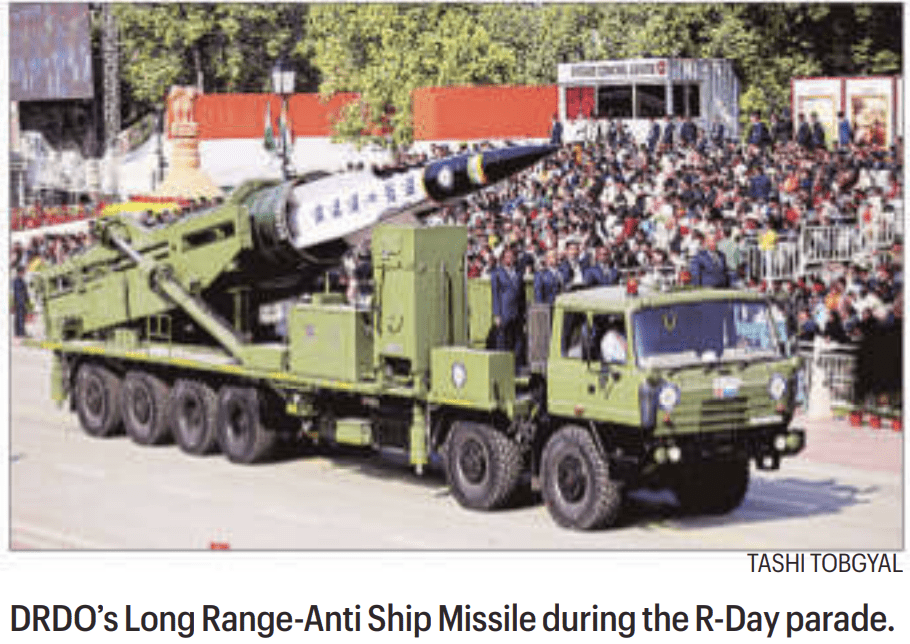
1. Context
1.1 One of the key highlights of the 77th Republic Day Parade was the first public showcase of DRDO’s Long Range Anti-Ship Hypersonic Missile (LR-AShM).
1.2 The missile has been developed by the Defence Research and Development Organisation (DRDO).
1.3 The system reflects India’s progress in hypersonic weapons capability.
2. Nature of the Missile
2.1 LR-AShM is a hypersonic glide missile designed to meet the coastal battery requirements of the Indian Navy.
2.2 It is capable of engaging both static targets and moving targets.
2.3 The missile can carry various payloads to a range of around 1,500 km.
3. Trajectory and Speed Characteristics
3.1 The missile follows a quasi-ballistic trajectory.
3.2 Hypersonic speeds start at around Mach 10 and average around Mach 5, with multiple skips during flight.
3.3 Unlike conventional ballistic missiles, quasi-ballistic missiles fly at lower altitudes and can manoeuvre mid-flight to change course and evade interception.
4. Detection and Survivability
4.1 The missile flies at low altitudes with very high speed and high manoeuvrability.
4.2 Due to this flight profile, enemy ground-based radars and ship-based radars cannot easily detect it.
4.3 This makes the missile extremely difficult to intercept.
5. Propulsion and Flight Phases
5.1 LR-AShM is configured with a two-stage solid propulsion rocket motor system.
5.2 Stage-1 boosts the missile to the required hypersonic velocity and then separates after burnout.
5.3 After separation, the vehicle performs an unpowered glide with required atmospheric manoeuvres before engaging the target.
6. Operational Range and Time
6.1 The missile has an operational range of up to 1,500 km.
6.2 It can cover this distance in approximately 15 minutes.
7. Strategic Significance
7.1 Hypersonic speed significantly increases difficulty of detection and interception.
7.2 Versions with higher ranges of up to 3,500 km are at various stages of development.
7.3 All classes of warships can be neutralised using this missile.
7.4 The missile will be a key asset for sea denial operations.
7.5 Sea denial capability is crucial for the strategically significant Indian Ocean Region.
7.6 Army versions, Air Force versions, and ship-fired naval versions are under consideration or development.
7.7 The missile enhances India’s position in the hypersonic arms domain.
8. Testing and Induction Timeline
8.1 A successful test was conducted by DRDO on November 16, 2024, off the coast of Odisha.
8.2 Further development includes integration of the warhead and sensor mechanisms.
8.3 Induction into the Indian Navy is expected in two to three years.
9. Other Hypersonic Technologies under Development
9.1 DRDO is working on two key technologies: hypersonic glide vehicles and hypersonic cruise missiles.
9.2 LR-AShM demonstrates indigenous capabilities in advanced materials and control systems for sustained hypersonic flight.
![UPSC coaching in India - Best UPSC coaching institute - UPSC Mentor coaching - UPSC preparation institute - IAS coaching center - UPSC online coaching - Best IAS coaching in India - UPSC classes for beginners - Civil services preparation - IAS preparation institute - UPSC mentorship program - UPSC exam guidance - IAS study material - UPSC Prelims coaching - UPSC Mains coaching - UPSC interview preparation - Best IAS online classes - UPSC coaching with personal mentorship - Affordable UPSC coaching - UPSC test series - UPSC coaching near me - Best IAS coaching near me - UPSC institute in [your city] - IAS coaching center in [your city] - The UPSC Mentor coaching - The UPSC Mentor IAS classes - The UPSC Mentor UPSC course - UPSC Mentor online program.](https://theupscmentor.in/wp-content/uploads/2025/11/cropped-THE-UPSC-1.png)