![http://UPSC%20coaching%20in%20India%20-%20Best%20UPSC%20coaching%20institute%20-%20UPSC%20Mentor%20coaching%20-%20UPSC%20preparation%20institute%20-%20IAS%20coaching%20center%20-%20UPSC%20online%20coaching%20-%20Best%20IAS%20coaching%20in%20India%20-%20UPSC%20classes%20for%20beginners%20-%20Civil%20services%20preparation%20-%20IAS%20preparation%20institute%20-%20UPSC%20mentorship%20program%20-%20UPSC%20exam%20guidance%20-%20IAS%20study%20material%20-%20UPSC%20Prelims%20coaching%20-%20UPSC%20Mains%20coaching%20-%20UPSC%20interview%20preparation%20-%20Best%20IAS%20online%20classes%20-%20UPSC%20coaching%20with%20personal%20mentorship%20-%20Affordable%20UPSC%20coaching%20-%20UPSC%20test%20series%20-%20UPSC%20coaching%20near%20me%20-%20Best%20IAS%20coaching%20near%20me%20-%20UPSC%20institute%20in%20[your%20city]%20-%20IAS%20coaching%20center%20in%20[your%20city]%20-%20The%20UPSC%20Mentor%20coaching%20-%20The%20UPSC%20Mentor%20IAS%20classes%20-%20The%20UPSC%20Mentor%20UPSC%20course%20-%20UPSC%20Mentor%20online%20program.](https://theupscmentor.in/wp-content/uploads/2024/11/THE-UPSC-2-e1762319162137.png)
 admin
admin 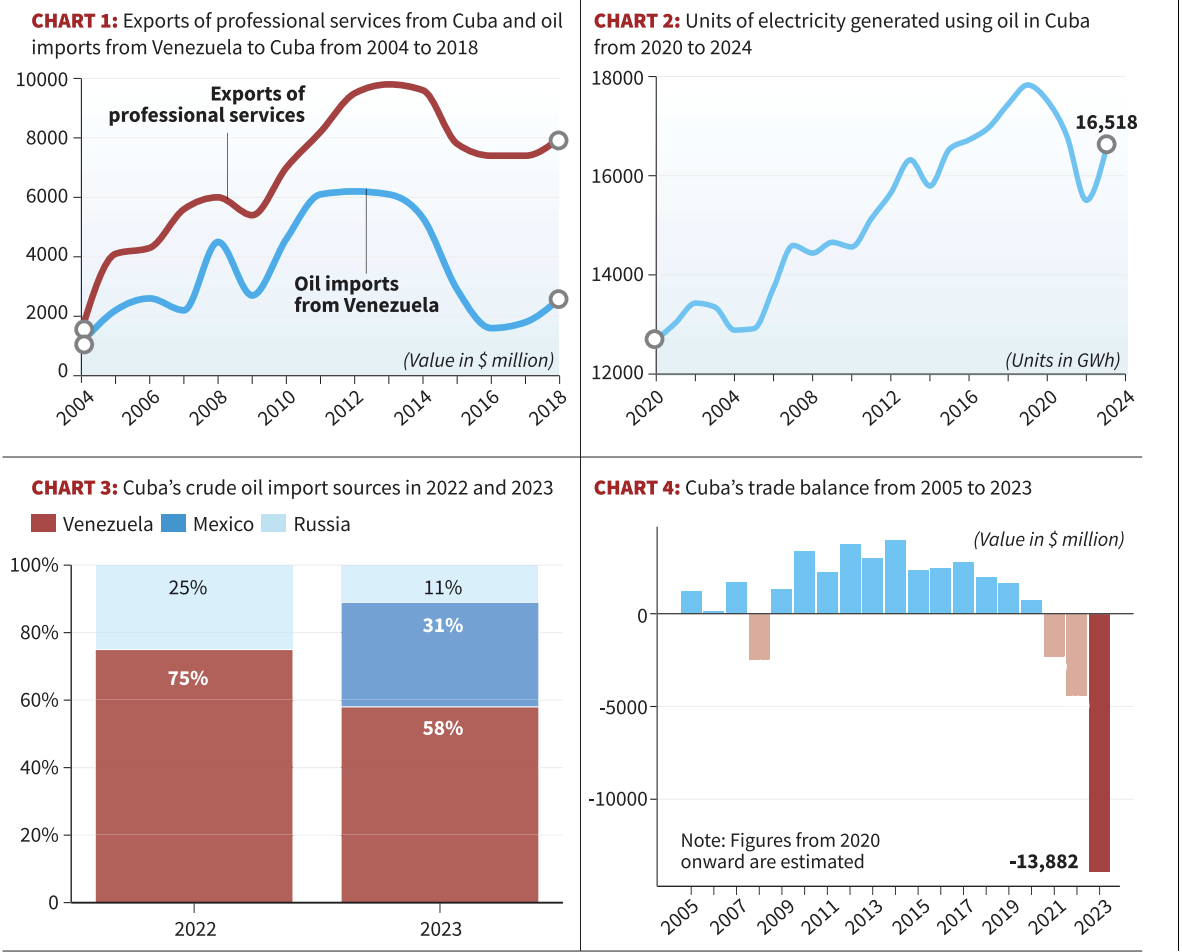
1. Context
1.1 The collapse of Venezuela’s oil sector has triggered a severe energy, fuel, transport, and food crisis in Cuba.
1.2 Disruptions intensified after U.S. action against Venezuela-linked oil shipments, sharply reducing fuel supplies to Cuba.
2. Historical Oil Relationship
2.1 Venezuela has historically been Cuba’s primary crude oil supplier under an oil-for-services arrangement.
2.2 Under this arrangement, Venezuela supplied subsidised oil in exchange for medical services, technology, and military assistance from Cuba.
3. Recent Decline in Venezuelan Supplies
3.1 By 2025, oil imports from Venezuela declined sharply to about 26,500 barrels per day, meeting only one-third of Cuba’s daily needs.
3.2 Venezuela’s inability to sustain exports reflects its domestic oil sector collapse and sanctions-related constraints.
4. Diversification of Oil Sources
4.1 In 2022, Venezuela accounted for 75% of Cuba’s crude oil imports, with Russia supplying the remaining 25%.
4.2 By 2023, Venezuela’s share fell to 58%, while Mexico emerged as a major supplier with 31%, and Russia’s share declined to 11%.
4.3 Mexico supplied about 5,000 barrels per day, but has stated it will not scale up output to meet Cuba’s growing needs.
5. Structural Energy Dependence
5.1 Oil accounts for 83% of Cuba’s electricity generation.
5.2 Electricity generation using oil increased from 12,700 GWh in 2000 to about 16,500 GWh in 2023.
5.3 Oil products constitute 56% of Cuba’s total energy consumption, supporting industry, transport, agriculture, and households.
6. Impact on Power and Food Systems
6.1 Reduced fuel availability has led to prolonged power cuts across the country.
6.2 Power outages have disrupted refrigeration, food storage, and transport, worsening food insecurity.
6.3 Cuba imports around 80% of its food, making energy disruptions particularly damaging to supply chains.
7. Role of U.S. Sanctions
7.1 The crisis is aggravated by the long-running U.S. embargo, imposed in 1962 after the Cuban Revolution.
7.2 Sanctions restrict Cuba’s access to global financial systems, as most transactions pass through U.S. banks.
7.3 Cuba’s designation as a State Sponsor of Terrorism in 2021 further deepened its international isolation.
7.4 Between 2021 and 2024, Cuban authorities documented over 1,000 instances of foreign banks refusing services.
8. Trade Balance and Financial Stress
8.1 UNCTAD data show Cuba shifted from modest trade surpluses in the mid-2000s to persistent trade deficits.
8.2 The trade deficit stood at $4.4 billion in 2022.
8.3 It worsened to $13.9 billion in 2023, the highest deficit on record.
9. Constraints on Alternatives
9.1 Cuba lacks foreign exchange reserves to purchase oil at commercial prices.
9.2 Limited access to international credit markets prevents short-term energy substitution.
9.3 The collapse of Venezuelan supplies has therefore directly crippled Cuba’s economy.
10. Overall Assessment
10.1 Venezuela’s oil collapse has removed Cuba’s most reliable energy lifeline.
10.2 Combined with U.S. sanctions and financial isolation, this has produced a systemic economic and humanitarian crisis in Cuba.
![UPSC coaching in India - Best UPSC coaching institute - UPSC Mentor coaching - UPSC preparation institute - IAS coaching center - UPSC online coaching - Best IAS coaching in India - UPSC classes for beginners - Civil services preparation - IAS preparation institute - UPSC mentorship program - UPSC exam guidance - IAS study material - UPSC Prelims coaching - UPSC Mains coaching - UPSC interview preparation - Best IAS online classes - UPSC coaching with personal mentorship - Affordable UPSC coaching - UPSC test series - UPSC coaching near me - Best IAS coaching near me - UPSC institute in [your city] - IAS coaching center in [your city] - The UPSC Mentor coaching - The UPSC Mentor IAS classes - The UPSC Mentor UPSC course - UPSC Mentor online program.](https://theupscmentor.in/wp-content/uploads/2025/11/cropped-THE-UPSC-1.png)