![http://UPSC%20coaching%20in%20India%20-%20Best%20UPSC%20coaching%20institute%20-%20UPSC%20Mentor%20coaching%20-%20UPSC%20preparation%20institute%20-%20IAS%20coaching%20center%20-%20UPSC%20online%20coaching%20-%20Best%20IAS%20coaching%20in%20India%20-%20UPSC%20classes%20for%20beginners%20-%20Civil%20services%20preparation%20-%20IAS%20preparation%20institute%20-%20UPSC%20mentorship%20program%20-%20UPSC%20exam%20guidance%20-%20IAS%20study%20material%20-%20UPSC%20Prelims%20coaching%20-%20UPSC%20Mains%20coaching%20-%20UPSC%20interview%20preparation%20-%20Best%20IAS%20online%20classes%20-%20UPSC%20coaching%20with%20personal%20mentorship%20-%20Affordable%20UPSC%20coaching%20-%20UPSC%20test%20series%20-%20UPSC%20coaching%20near%20me%20-%20Best%20IAS%20coaching%20near%20me%20-%20UPSC%20institute%20in%20[your%20city]%20-%20IAS%20coaching%20center%20in%20[your%20city]%20-%20The%20UPSC%20Mentor%20coaching%20-%20The%20UPSC%20Mentor%20IAS%20classes%20-%20The%20UPSC%20Mentor%20UPSC%20course%20-%20UPSC%20Mentor%20online%20program.](https://theupscmentor.in/wp-content/uploads/2024/11/THE-UPSC-2-e1762319162137.png)
 admin
admin 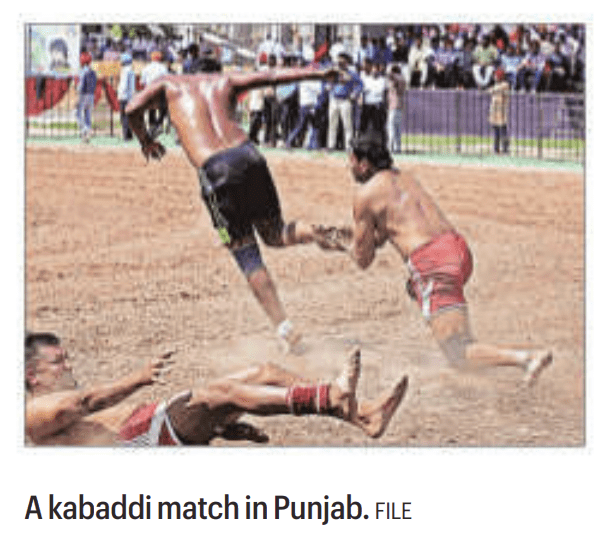
0.1 Kabaddi’s traditional role in Punjab
0.1.1 Kabaddi has long been central to rural life in Punjab, attracting large crowds and local participation.
0.1.2 Traditionally, tournaments were community-based with symbolic rewards, not large cash prizes.
0.2 Shift towards commercialisation
0.2.1 From the late 1990s and early 2000s, organisers began offering large cash prizes instead of traditional rewards.
0.2.2 This provided income opportunities for rural youth but also transformed kabaddi into a high-stakes commercial sport.
0.3 Entry of big money and sponsors
0.3.1 Sponsors included local businessmen, transporters, real estate players, and later NRIs, especially in the Doaba region.
0.3.2 According to police officials, NRI money entered kabaddi heavily in the early 2000s, changing the scale of tournaments.
0.3.3 Even after a crackdown in 2013–14, money continued to flow through less transparent channels.
0.4 Escalating tournament budgets
0.4.1 Tournament budgets now range from ₹1 lakh to ₹40 lakh in Punjab, and even higher abroad.
0.4.2 The kabaddi ecosystem is valued at around ₹100 crore annually, with trophies alone worth ₹10 crore.
0.4.3 Players are rewarded with cars, tractors, SUVs, making performance financially crucial.
0.5 State involvement and later withdrawal
0.5.1 In 2013, the Punjab government announced cash awards worth ₹7 crore to promote kabaddi and counter drug abuse.
0.5.2 These tournaments were discontinued after the SAD-BJP alliance lost power in 2017, leaving regulation weak.
0.6 Betting and match-fixing nexus
0.6.1 High stakes have encouraged betting and fixing, especially in unregulated rural tournaments.
0.6.2 Bets are often placed online, allowing anonymity and ease of manipulation.
0.6.3 Players and support staff are pressured to fix raids or placements, directly influencing outcomes.
0.7 Role of criminal gangs
0.7.1 Several gangsters compete for control over tournaments, using intimidation to influence organisers and sponsors.
0.7.2 Rivalries between gangs like Bambiha group and Lawrence Bishnoi syndicate have spilled into violence.
0.7.3 Kabaddi events are used to launder money and build criminal reputations through fear.
0.8 Why kabaddi is ideal for betting
0.8.1 Matches are short, frequent, and unpredictable, often decided by a single raid.
0.8.2 The high frequency of matches, especially in winter, increases betting opportunities.
0.8.3 Poor financial security of players makes them vulnerable to manipulation.
0.9 Absence of effective regulation
0.9.1 Punjab lacks a single strong governing body to regulate kabaddi.
0.9.2 Multiple federations exist under the Societies Act, many with political backing and their own rules.
0.9.3 None are affiliated with the Amateur Kabaddi Federation of India, creating regulatory vacuum.
0.9.4 As a result, allegations of fixing or violence often go unpunished, allowing illegal money to circulate freely.
Core takeaway
Kabaddi in Punjab has shifted from a community sport to a high-risk betting ecosystem, driven by poor regulation, frequent matches, criminal infiltration, and big money, making it fertile ground for gambling and violence.
![UPSC coaching in India - Best UPSC coaching institute - UPSC Mentor coaching - UPSC preparation institute - IAS coaching center - UPSC online coaching - Best IAS coaching in India - UPSC classes for beginners - Civil services preparation - IAS preparation institute - UPSC mentorship program - UPSC exam guidance - IAS study material - UPSC Prelims coaching - UPSC Mains coaching - UPSC interview preparation - Best IAS online classes - UPSC coaching with personal mentorship - Affordable UPSC coaching - UPSC test series - UPSC coaching near me - Best IAS coaching near me - UPSC institute in [your city] - IAS coaching center in [your city] - The UPSC Mentor coaching - The UPSC Mentor IAS classes - The UPSC Mentor UPSC course - UPSC Mentor online program.](https://theupscmentor.in/wp-content/uploads/2025/11/cropped-THE-UPSC-1.png)