![http://UPSC%20coaching%20in%20India%20-%20Best%20UPSC%20coaching%20institute%20-%20UPSC%20Mentor%20coaching%20-%20UPSC%20preparation%20institute%20-%20IAS%20coaching%20center%20-%20UPSC%20online%20coaching%20-%20Best%20IAS%20coaching%20in%20India%20-%20UPSC%20classes%20for%20beginners%20-%20Civil%20services%20preparation%20-%20IAS%20preparation%20institute%20-%20UPSC%20mentorship%20program%20-%20UPSC%20exam%20guidance%20-%20IAS%20study%20material%20-%20UPSC%20Prelims%20coaching%20-%20UPSC%20Mains%20coaching%20-%20UPSC%20interview%20preparation%20-%20Best%20IAS%20online%20classes%20-%20UPSC%20coaching%20with%20personal%20mentorship%20-%20Affordable%20UPSC%20coaching%20-%20UPSC%20test%20series%20-%20UPSC%20coaching%20near%20me%20-%20Best%20IAS%20coaching%20near%20me%20-%20UPSC%20institute%20in%20[your%20city]%20-%20IAS%20coaching%20center%20in%20[your%20city]%20-%20The%20UPSC%20Mentor%20coaching%20-%20The%20UPSC%20Mentor%20IAS%20classes%20-%20The%20UPSC%20Mentor%20UPSC%20course%20-%20UPSC%20Mentor%20online%20program.](https://theupscmentor.in/wp-content/uploads/2024/11/THE-UPSC-2-e1762319162137.png)
 admin
admin 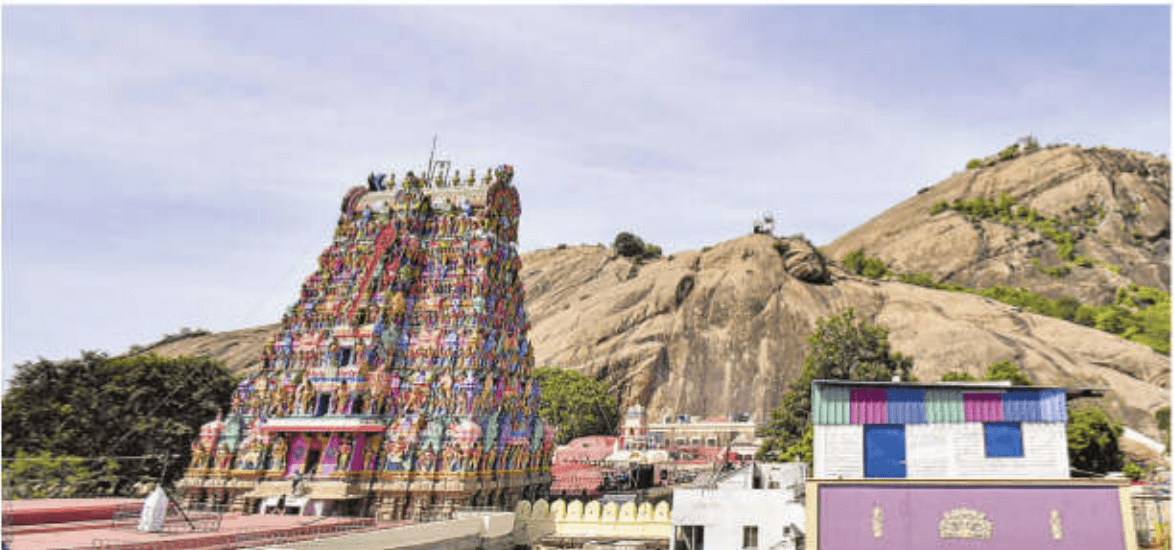
0.1 What the court case was about
0.1.1 The dispute concerned permission to light the Karthigai Deepam (ceremonial lamp) on a stone pillar located on Thirupparankundram hill near Madurai.
0.1.2 A Division Bench of the Madras High Court settled the matter on January 7 by allowing the ceremony under strict conditions.
0.2 Why Thirupparankundram hill is sensitive
0.2.1 The hill is about 1,050 feet high and has been associated with multiple religious traditions over centuries.
0.2.2 At the base of the hill is the Arulmigu Subramanian Swamy Cave Temple, a long-standing Hindu worship site.
0.2.3 The hill also contains Jain rock beds and caves, carved over many centuries.
0.2.4 At the summit lies the burial site of Sufi saint Sikandar Badusha, where a dargah later developed.
0.3 How multiple identities led to disputes
0.3.1 Because of its Jain and Sufi associations, the hill came to be known as “Samanar Hill” and “Sikandar Hill.”
0.3.2 During festivals, disputes frequently arose over access, movement, and use of space, requiring police deployment.
0.3.3 These overlapping religious claims made the hill a recurring site of conflict.
0.4 Early legal settlement on ownership
0.4.1 In 1923, a trial court ruled that most of the unoccupied hill and the pilgrim path belonged to the temple.
0.4.2 However, the topmost peak, the area around the mosque, and the steps leading to it were held to be Muslim property.
0.4.3 This division later became the basis for repeated legal disputes.
0.5 History of lamp-lighting restrictions
0.5.1 Authorities stopped attempts to light a ceremonial lamp near the summit in the 19th and early 20th centuries.
0.5.2 The reasons cited were the absence of an established custom and law-and-order concerns.
0.5.3 In 1996, the High Court directed that the Karthigai Deepam be lit at the Uchipillaiyar Temple instead.
0.6 Fresh petitions and the “Deepathoon” issue
0.6.1 In late November 2025, worshippers approached the court seeking permission to light the lamp on December 3.
0.6.2 The lamp was proposed to be lit at a stone pillar locally known as “Deepathoon.”
0.6.3 The State and the Hindu Religious and Charitable Endowments Department opposed this, claiming the structure was only a survey marker.
0.7 Court’s factual finding on the structure
0.7.1 The court held that the structure was indeed a Deepathoon, not a survey marker.
0.7.2 It noted that the pillar had a carved cavity capable of holding oil and wicks, supporting its ceremonial use.
0.7.3 The court therefore rejected the State’s claim.
0.8 Law-and-order concerns addressed
0.8.1 The administration argued that allowing the ceremony could disturb public order.
0.8.2 The court dismissed these fears as imaginary, stating that a small, regulated ceremony once a year could not be considered unmanageable.
0.9 Conditions imposed by the court
0.9.1 The lamp may be lit only by a limited team of temple officials, with no public access.
0.9.2 The exercise must be conducted with police assistance and coordinated by the District Collector.
0.9.3 Conditions imposed by the Archaeological Survey of India must be followed to protect the monument.
1.0 Final legal position
1.0.1 The court allowed the ceremony as a restoration of religious practice, not as a mass public event.
1.0.2 By balancing religious practice, heritage protection, and law-and-order concerns, the ruling aimed to prevent future conflict on the hill.
![UPSC coaching in India - Best UPSC coaching institute - UPSC Mentor coaching - UPSC preparation institute - IAS coaching center - UPSC online coaching - Best IAS coaching in India - UPSC classes for beginners - Civil services preparation - IAS preparation institute - UPSC mentorship program - UPSC exam guidance - IAS study material - UPSC Prelims coaching - UPSC Mains coaching - UPSC interview preparation - Best IAS online classes - UPSC coaching with personal mentorship - Affordable UPSC coaching - UPSC test series - UPSC coaching near me - Best IAS coaching near me - UPSC institute in [your city] - IAS coaching center in [your city] - The UPSC Mentor coaching - The UPSC Mentor IAS classes - The UPSC Mentor UPSC course - UPSC Mentor online program.](https://theupscmentor.in/wp-content/uploads/2025/11/cropped-THE-UPSC-1.png)