![http://UPSC%20coaching%20in%20India%20-%20Best%20UPSC%20coaching%20institute%20-%20UPSC%20Mentor%20coaching%20-%20UPSC%20preparation%20institute%20-%20IAS%20coaching%20center%20-%20UPSC%20online%20coaching%20-%20Best%20IAS%20coaching%20in%20India%20-%20UPSC%20classes%20for%20beginners%20-%20Civil%20services%20preparation%20-%20IAS%20preparation%20institute%20-%20UPSC%20mentorship%20program%20-%20UPSC%20exam%20guidance%20-%20IAS%20study%20material%20-%20UPSC%20Prelims%20coaching%20-%20UPSC%20Mains%20coaching%20-%20UPSC%20interview%20preparation%20-%20Best%20IAS%20online%20classes%20-%20UPSC%20coaching%20with%20personal%20mentorship%20-%20Affordable%20UPSC%20coaching%20-%20UPSC%20test%20series%20-%20UPSC%20coaching%20near%20me%20-%20Best%20IAS%20coaching%20near%20me%20-%20UPSC%20institute%20in%20[your%20city]%20-%20IAS%20coaching%20center%20in%20[your%20city]%20-%20The%20UPSC%20Mentor%20coaching%20-%20The%20UPSC%20Mentor%20IAS%20classes%20-%20The%20UPSC%20Mentor%20UPSC%20course%20-%20UPSC%20Mentor%20online%20program.](https://theupscmentor.in/wp-content/uploads/2024/11/THE-UPSC-2-e1762319162137.png)
 admin
admin 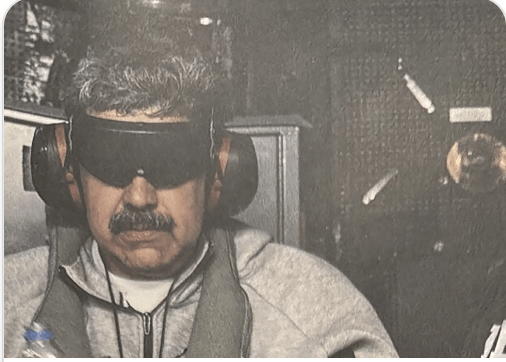
0.1 Context: Why this article is important
0.1.1 The article analyses the revival and expansion of U.S. interventionism under President Donald Trump.
0.1.2 It uses recent U.S. actions in Venezuela to argue that the Monroe Doctrine has been aggressively reinterpreted.
0.1.3 The piece also highlights India’s declining voice and relevance in global affairs amid these shifts.
0.2 Revival of the Monroe Doctrine
0.2.1 The Monroe Doctrine (1823) warned European powers against interference in the Americas.
0.2.2 Despite doubts about U.S. power today, the doctrine was re-invoked in practice by President Trump.
0.2.3 In January 2026, the U.S. used military power to capture Venezuela’s elected President, marking a dramatic expansion of the doctrine.
0.2.4 No foreign power had previously intervened in Venezuela’s internal affairs in this manner.
0.3 “Hegemonic Presidents” and regime change
0.3.1 The article terms this approach the Bush–Trump doctrine.
0.3.2 The closest parallel cited is the U.S. invasion of Panama (1989) under President George Bush Sr.
0.3.3 The declared goal in such interventions has been regime change.
0.3.4 Successive U.S. presidents have acted as “Sheriff” in different regions:
0.3.4.1 Bush Jr. in Iraq
0.3.4.2 Bush Jr., Obama and Trump in Afghanistan
0.4 Venezuela case: power and motivation
0.4.1 The U.S. justified action against President Nicolas Maduro using allegations of drug trafficking and conspiracy.
0.4.2 The article notes these charges are unsupported by public evidence.
0.4.3 The underlying motivation identified is control over Venezuela’s oil wealth.
0.4.4 Venezuela holds the largest oil reserves in the world and had been pivoting towards China for exports, arms and investment.
0.4.5 The U.S. has openly stated it will allow U.S. oil companies to produce and sell Venezuelan oil.
0.5 Demonstration of U.S. military dominance
0.5.1 The four-hour operation (“Absolute Resolve”) showcased:
0.5.1.1 Superior technology
0.5.1.2 Intelligence and planning
0.5.1.3 Precision execution
0.5.2 The operation demonstrated the U.S. military as the most lethal war machine ever built.
0.5.3 The article suggests the U.S. is positioning itself as a global enforcer, challenged only by China.
0.6 India’s declining global relevance
0.6.1 India went largely unnoticed before and after the Venezuela operation.
0.6.3 India’s official statement on Venezuela:
0.6.3.1 Did not condemn the capture of President Maduro
0.6.3.2 Referred vaguely to “recent developments”
0.6.3.3 Called for peaceful dialogue
0.6.4 India is described as isolated among BRICS founders and Europe.
0.6.5 A former Indian ambassador is quoted saying “what India said would not make a difference.”
0.7 Free pass to imperialism
0.7.1 The operation gives a free pass to Russia and China to pursue similar actions.
0.7.2 China may be encouraged to apply its “One China” policy more aggressively.
0.7.3 If China intrudes into India’s northern borders or Arunachal Pradesh, India may be left to fend for itself.
0.7.4 The U.S. shows less interest in India after securing Venezuela’s oil reserves.
0.7.5 Trade tools like tariffs may be used to manipulate Indian exports.
0.8 Overall argument of the article
0.8.1 Donald Trump is portrayed as the most interventionist U.S. President.
0.8.2 U.S. actions signal the return of imperialism.
0.8.3 The article warns of the erosion of national sovereignty and weakening of international norms.
![UPSC coaching in India - Best UPSC coaching institute - UPSC Mentor coaching - UPSC preparation institute - IAS coaching center - UPSC online coaching - Best IAS coaching in India - UPSC classes for beginners - Civil services preparation - IAS preparation institute - UPSC mentorship program - UPSC exam guidance - IAS study material - UPSC Prelims coaching - UPSC Mains coaching - UPSC interview preparation - Best IAS online classes - UPSC coaching with personal mentorship - Affordable UPSC coaching - UPSC test series - UPSC coaching near me - Best IAS coaching near me - UPSC institute in [your city] - IAS coaching center in [your city] - The UPSC Mentor coaching - The UPSC Mentor IAS classes - The UPSC Mentor UPSC course - UPSC Mentor online program.](https://theupscmentor.in/wp-content/uploads/2025/11/cropped-THE-UPSC-1.png)